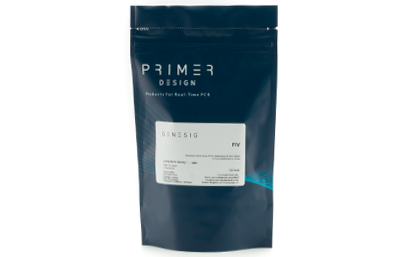
Exceptional value for money Rapid detection of all clinically relevant subtypes Positive copy number standard curve for quantification Highly specific detection profile High priming efficiency Broad dynamic detection range (>6 logs) Sensitive to < 100 copies of target
Accurate controls to confirm findings
Aspergillus niger Nucleic acid testing (NAT) is the method of choice for detection and quantification of a wide range of micro organisms. Primerdesign manufactures and supplies high quality quantitative real-time PCR kits for the detection and simultaneous quantification of numerous significant pathogens . A copy number standard curve is provided for quantification and an the internal extraction template (DNA or RNA), controls for the quality of the nucleic acid extraction and eliminates false negative results.
The kit is designed with the broadest possible detection profile to ensure that all clinically relevant strains and subtypes are detected. Target sequences are selected by working with data from key opinion leaders in the field. Multiple sequence alignments and unprecedented real-time PCR expertise in design and validation ensure the best possible kit.
Details of the target and priming specificity are included in the individual handbooks above.
Packaged, optimised and ready to use. Expect Better Data.
Other Products
16S V2-V3 Library Preparation Kit for Illumina
Product Info
Document
Product Info
Overview
Protocol optimized for DNA isolated from a diversity of samples including stool, soil, water, saliva, plant, urine, skin, and more
Simple and quick workflow: library could be prepared in less than 5 hours
Component of Norgen’s metagenomics workflow
A single NGS run can be prepared with up to 384 unique dual-index libraries
The 16S V2-V3 Library Preparation Kit for Illumina consists of the reagents and components required for library preparation of the 16S V2-V3 amplicon libraries to be used for next-generation sequencing on Illumina platforms. All molecular reagents including primers, enzyme mixes, indexes, and buffers are provided. Instructions for PCR clean up with the AMPure XP Magnetic Beads (supplied by customer) are also included for rapid purification of nucleic acid products generated at two steps of the workflow. The library prep workflow could be used for purified DNA inputs from different sources including stool, soil, water, saliva, plant, urine, skin swab, vaginal swab, cheek swab, nasal swab, plasma/serum, tongue swab, gum swab, and others.
The 16S V2-V3 Library Preparation Kit for Illumina has a streamlined procedure that reduces the handling time such that the library prep procedure can be completed in approximately 4 hours (see diagram below). Input DNA is first subjected to targeted PCR to amplify the V2-V3 region of the DNA encoding 16S rRNA. The post-PCR reaction is then cleaned up using AMPure XP beads. Dual index primers are then added using a limited-cycle PCR. The indexed amplicons flanked by 5′ and 3′ barcoded adaptors are then cleaned using AMPure XP beads. The libraries are then ready for quantification, pooling and sequencing.
Storage Conditions and Product Stability Norgen’s 16S V2-V3 Library Prep Kit for Illumina is shipped as one kit box (for the 24 prep kit) or two sub-component kits (for the 96 prep kit). All kits should be stored at -20°C upon arrival.
All kit components should remain stable for at least 1 year when stored at the specified storage conditions.
Sequentially purify total RNA and total proteins from a single sample
Kit includes a gDNA elimination column
No sample splitting required
No phenol step required for efficient isolation
Ideal for small or difficult to obtain samples
Purify RNA and proteins from cultured animal cells, tissues, blood, bacteria, yeast, fungi or plants
Rapid and efficient spin column procedure
Purification is based on spin column chromatography that uses Norgen’s proprietary resin separation matrix
This kit provides a rapid, single column method for the isolation and purification of total RNA (including miRNA) and proteins sequentially from a single sample of cultured animal cells, tissues, blood, bacteria, yeast, fungi or plants. The total RNA and proteins are both column purified in under 25 minutes using a single column.
Purified RNA is of a high quality and yield, and is suitable for NGS, RT-qPCR and microarrays.
This kit eliminates DNA efficiently using a gDNA removal column.
Proteins are eluted in buffer and are ready for downstream applications such as Western Blots, Mass Spec and ELISA. The proteins will not require precipitation, resuspending of pellets, or any further cleaning.
This kit is ideal for researchers who are interested in studying the transcriptome and proteome of a single sample, such as for studies of microRNA profiling, gene expression including gene silencing experiments or mRNA knockdowns, studies involving biomarker discovery, and for characterization of cultured cell lines. Norgen’s RNA/Protein Purification Plus Kit is especially useful for researchers who are isolating macromolecules from precious, difficult to obtain or small samples such as biopsy materials or single foci from cell cultures, as it eliminates the need to fractionate the sample. Furthermore, analysis will be more reliable since the RNA and proteins are derived from the same sample, thereby eliminating inconsistent results. The purified macromolecules are of the highest purity and can be used in a number of different downstream applications.
Average Yields*: HEK 293 Cells (1 x 10⁶ cells) HEK 293 Cells (1 x 10⁶ cells) Liver (15 mg) Liver (15 mg)
10-15 μg RNA 70-100 μg protein 30-35 μg RNA 100-150 μg protein
* Average yields will vary depending upon a number of factors including species, growth conditions used and developmental stage.
Storage Conditions and Product Stability The Protein Loading Dye should be stored at -20°C after the addition of DL-Dithiothreitol (DTT). All solutions should be kept tightly sealed and stored at room temperature. This kit is stable for 1 year after the date of shipment.
Plasma/Serum Circulating and Exosomal RNA Purification Kits (Slurry Format)
Product Info
Document
Product Info
Overview
Isolate all sizes of circulating and exosomal RNA, including microRNA
Versatile plasma and serum input volumes
Concentrate circulating and exosomal RNA into small elution volumes
Isolate inhibitor-free circulating and exosomal RNA
Bind and elute all RNA irrespective of size or GC content, without bias
Available in Spin Column or 96-well plate formats
Process 96-well plates using vacuum or centrifugation
Purified RNA is suitable for a variety of downstream applications, including Small RNA Sequencing. Find out more information on Norgen’s NGS services
Compatible with Streck Cell-Free RNA BCT® Tubes
Purification is based on Norgen’s proprietary resin matrix
These kits are able to isolate all sizes of circulating and exosomal RNA, including microRNA, without the use of phenol or chloroform. The slurry format provides an advantage over other available kits in that it does not require extension tubes for the purification of free-circulating and exosomal RNA from large sample volumes. RNA can be isolated from either fresh or frozen samples using this kit. This kit is suitable for the isolation of RNA from serum or plasma prepared from blood collected only on either EDTA or citrate. Plasma samples prepared from blood collected on heparin should not be used as heparin can significantly interfere with many downstream applications including RT-PCR. The purified plasma/serum free-circulating and exosomal RNA is eluted in an elution solution that is compatible with PCR, qPCR, methylation-sensitive reverse transcription qPCR, reverse transcription PCR, Northern blotting, RNase protection and primer extension, expression array assays, and NGS.
Free-circulating plasma and serum RNA can serve as both tumor- and fetal-specific markers for cancer detection and prenatal diagnosis. As well, free-circulating RNAs have the potential to provide biomarkers for other disease states. Free-circulating RNA in plasma or serum are usually present as short fragments of less than 1000nt, and free-circulating miRNA (21nt) can also be found in plasma and serum.
Plasma/Serum Circulating and Exosomal RNA Purification Kit (Slurry)
Norgen’s Plasma/Serum Circulating and Exosomal RNA Purification Kit (Slurry Format) provides a fast, reliable and simple procedure for isolating circulating RNA and exosomal RNA from plasma and serum samples ranging from 0.25 mL to 5 mL.
Plasma/Serum Circulating and Exosomal RNA Purification Mini Kit (Mini Slurry)
Norgen’s Plasma/Serum Circulating and Exosomal RNA Purification Mini Kit (Slurry Format) provides a fast, reliable and simple procedure for isolating circulating and exosomal RNA from plasma and serum samples ranging from 0.25 mL to 2 mL.
Norgen’s Plasma/Serum Circulating and Exosomal RNA Purification 96-Well Kit (Slurry Format) provides a high throughput method for isolating circulating and exosomal RNA from plasma and serum samples using either a vacuum manifold or centrifugation.
Plasma/Serum Circulating and Exosomal RNA Purification Maxi Kit (Maxi Slurry)
Norgen’s Plasma/Serum Circulating and Exosomal RNA Purification Maxi Kit (Slurry Format) provides a fast, reliable and simple procedure for isolating circulating RNA and exosomal RNA from various amounts of plasma/serum ranging from 2 mL to 5 mL.
Cat.29500 Storage Conditions and Product Stability All solutions should be kept tightly sealed and stored at room temperature. This kit is stable for 2 years after the date of shipment.