
Description
This kit can be used in quantitative and qualitative analysis of Pentachlorophenol residue in honey, milk, juice, and rice.

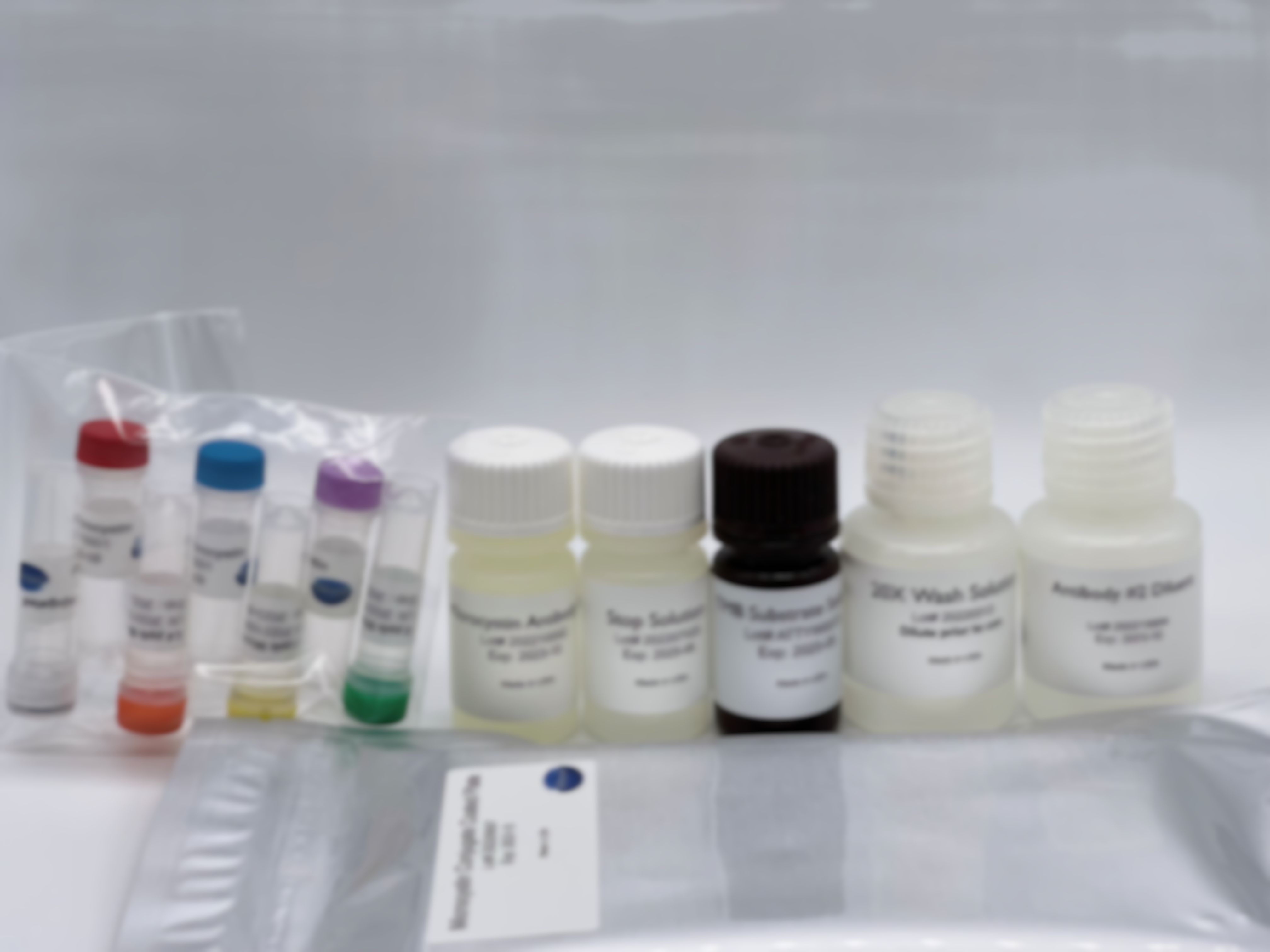
This kit can be used in quantitative and qualitative analysis of Pentachlorophenol residue in honey, milk, juice, and rice.

Vibrio cholerae is a comma-shaped, gram-negative bacterium. It is the cause of cholera in humans, which affects the upper small intestine. Transmission of the disease is mainly through contaminated food or water. Human subjects affected by cholera exhibit severe watery diarrhea and vomiting, caused by the cholera toxin produced by the bacterium. Many cases of cholera are life-threatening, as diarrhea and associated vomiting can lead to rapid dehydration and electrolyte loss. Even with the extensive research on its epidemiology, cholera still affects over 5 million people per year worldwide.
Vibrio cholerae TaqMan PCR Kit, 100 reactions
Vibrio cholerae TaqMan PCR Probe/Primer Set and Controls, 100 reactions
Figure 1 / 3

Click for expanded view
Storage Conditions and Product Stability
All kit components can be stored for 2 years after the date of production without showing any reduction in performance.
All kit components should be stored at -20°C upon arrival. Repeated thawing and freezing (> 2 x) of the Master Mix and Positive Control should be avoided, as this may affect the performance of the assay. If the reagents are to be used only intermittently, they should be frozen in aliquots.
| Component | Cat. TM38550 (100 preps) | Cat. TM38510 (100 preps) |
|---|---|---|
| MDx TaqMan 2X PCR Master Mix | 2 x 700 μL | – |
| V. cholerae Primer & Probe Mix | 280 μL | 280 μL |
| V. cholerae Positive Control | 150 μL | 150 μL |
| Nuclease-Free Water (Negative Control) | 1.25 mL | 1.25 mL |
| Product Insert | 1 | 1 |

This kit provides a rapid method for the isolation and purification of both cytoplasmic and nuclear RNA from cultured animal cells and small tissue samples. The kit can be used to isolate all sizes of RNA from the cytoplasmic and nuclear RNA fractions, including all small RNA species without any requirement for phenol. Included in the kit are sufficient reagents to perform either 50 cytoplasmic RNA preparations or 25 cytoplasmic and 25 nuclear RNA preparations. Ten samples can be processed in approximately 45 minutes. This kit is also available in a 100 prep size.
Background
In certain circumstances it is desirable to be able to isolate fractionated RNA as opposed to total RNA. For example, it may be preferable to isolate only mature, cytoplasmic RNA for some studies on expression profiling. Alternatively it may be desirable to isolate nuclear RNA in order to investigate and study pre-processed (non-spliced) RNA. Furthermore, this kit can be used to isolate RNA for downstream applications where it is necessary to avoid DNA contamination, since the cytoplasmic fraction has been shown to be free of all traces of genomic DNA.
Figure 1 / 4
Click for expanded view
| Kit Specifications | |
| Maximum Column Binding Capacity | Up to 50 µg RNA |
| Maximum Column Loading Volume | 650 µL |
| Size of RNA Purified | All sizes, including small RNA (< 200 nt) |
| Time to Complete 10 Purifications | 45 minutes |
| RNA Yield HeLa (1 x 10⁶) – Cytoplasmic RNA HeLa (1 x 10⁶) – Nuclear RNA | 15 µg ≤ 3.5 µg |
Storage Conditions and Product Stability
All solutions should be kept tightly sealed and stored at room temperature. This kit is stable for 2 years after the date of shipment.
| Component | Cat. 21000 (50 preps) | Cat. 37400 (100 preps) |
|---|---|---|
| Lysis Buffer J | 20 mL | 2 x 20 mL |
| Buffer SK | 40 mL | 2 x 40 mL |
| Wash Solution A | 38 mL | 2 x 38 mL |
| Elution Buffer E | 6 mL | 2 x 6 mL |
| Mini Spin Columns | 50 | 100 |
| Collection Tubes | 50 | 100 |
| Elution Tubes (1.7 mL) | 50 | 100 |
| Product Insert | 1 | 1 |

NEST 2.0 mL Microcentrifuge Tube, polypropylene, sterile, DNase, RNase, pyrogen and endotoxin free. Relative centrifugal force (RCF): 30000 x g. Easy-open, secure safelock cap seal. 500 count.
Labware definition is available for immediate use in Opentron’s Labware Library.
NEST 2.0 mL Microcentrifuge Tube, polypropylene, sterile, DNase, RNase, pyrogen and endotoxin free. Relative centrifugal force (RCF): 30000 x g. Easy-open, secure safelock cap seal. 500 count.
Labware definition is available for immediate use in Opentron’s Labware Library.