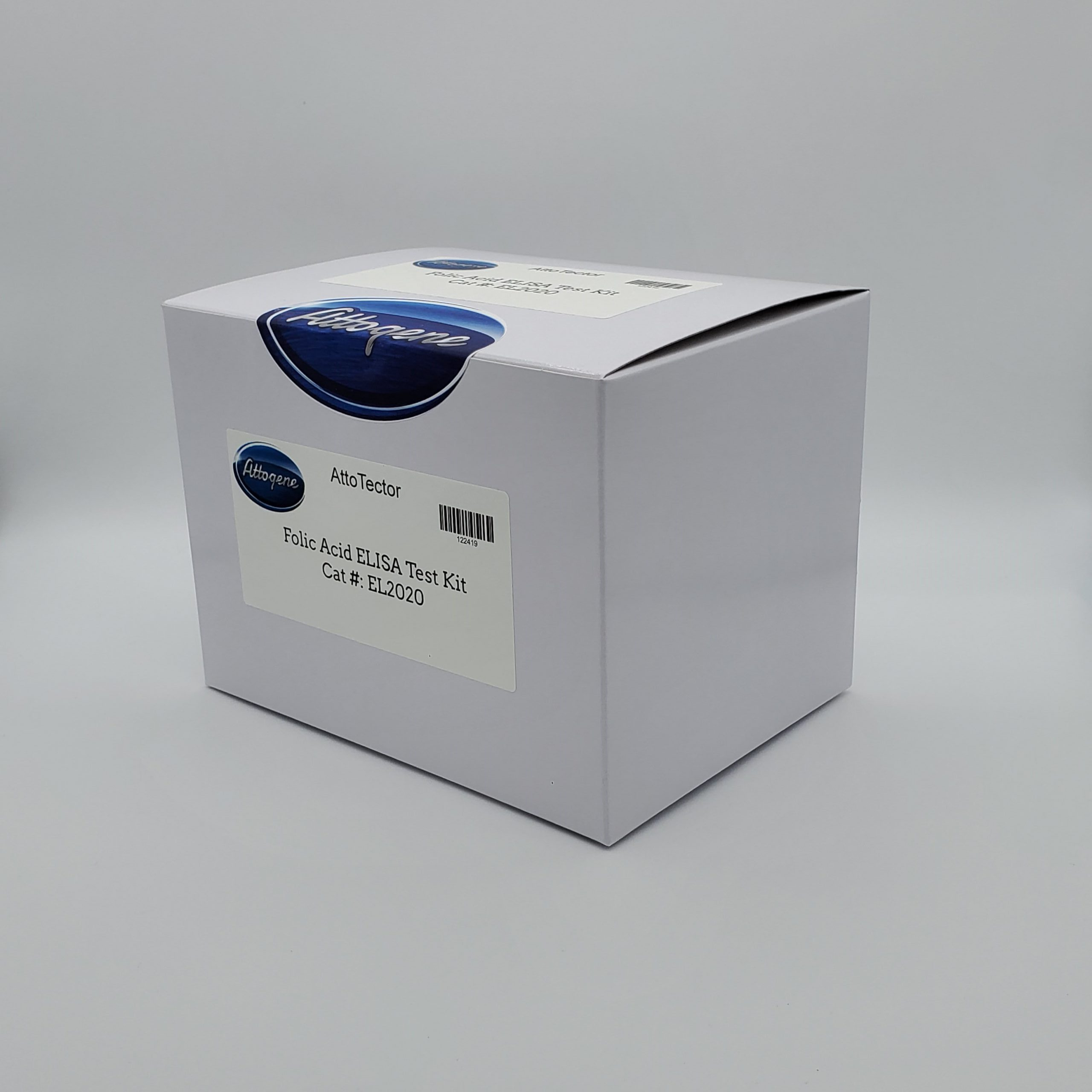
Folic acid, is one of the B vitamins used to treat anemia caused by folic acid deficiency.
This kit is a product based on indirect-competitive ELISA, which is fast, easy, accurate and sensitive compared with common instrumental analysis.
Detection limit if folic acid in liquid samples
Other Products
NGS Library Circularization Kit (MGI Platform)
Product Info
Document
Product Info
The NGS Library Circularization Kit (MGI Platform) was developed for preparation of single-stranded circular DNA libraries for next generation sequencing (MGI platform).
The kit uses linear dsDNA libraries (MGI platform) as input and enriches the circularized single-stranded DNA libraries. The circularization kit has a higher library circularization efficiency (25%) as compared to other vendors (7-15%).
NGS Library Circularization Kit workflow
Comparison of Library Circularization Efficiency
Kit features
Fast protocol
Total protocol time is around 1 hour
Hands-on time is only ~10 minutes
Guaranteed high library circularization efficiency as compared to other kits
Input DNA amount: 100-300 ng
Document
The NGS Library Circularization Kit (MGI Platform) was developed for preparation of single-stranded circular DNA libraries for next generation sequencing (MGI platform).
DBCO-PEG12-NHS Ester is a monodisperse PEG linker which enable free copper click chemistry with N3 group. NHS ester moiety can react specifically and efficiently with primary amines to form a covalent amide bond. The hydrophilic PEG spacer arm improves water solubility and provides a long and flexible connection that minimizes steric hindrance involved with ligation. Reagent grade, for research purpose. Please contact us for GMP-grade inquiries.
Document
DBCO-PEG12-NHS Ester is a monodisperse PEG linker which enable free copper click chemistry with N3 group. NHS ester moiety can react specifically and efficiently with primary amines to form a covalent amide bond. The hydrophilic PEG spacer arm improves water solubility and provides a long and flexible connection that minimizes steric hindrance involved with ligation. Reagent grade, for research purpose. Please contact us for GMP-grade inquiries.
This kit is used for extracting total viral nucleic acid from non-cell/low cell content biological samples such as body fluid, serum, plasma, urine, immersion solution, tissue homogenate supernatant, culture supernatant, etc., the extracted products can be used for clinical in vitro detection.
Details
Specifications
Features
Specifications
Main Functions
Extract viral RNA/DNA from non-cell/low cell content biological samples
Applications
RT-PCR,PCR,NGS
Products
Viral total nucleic acid
Purification method
Mini spin column
Purification technology
Silica technology
Process method
Manual (centrifugation or vacuum)
Sample type
Cell-free body fluid such as plasma, serum, soaking solution and tissue homogenate supernatant
Sample amount
200μl
Yield
2-10μg
Elution volume
≥30μl
Time per run
≤30 minutes
Liquid carrying volume per column
800μl
Binding yield of column
100μg
Principle
This product is based on silica gel purification. The sample is lysed and digested with lysate and protease, DNA / RNA is released into the lysate. Transfer to an adsorption plate and filter column. DNA/RNA is adsorbed on the membrane, while protein is not adsorbed and is removed with filtration. After washing proteins and other impurities, DNA / RNA was finally eluted with low-salt buffer (10 Mm Tris, pH 8.0).
Advantages
Fast – several samples can be extracted in 20 minutes by column method
High quality – high purity total RNA can be directly used in various sensitive downstream applications
Safe – no phenol chloroform extraction required
Sensitive – DNA/RNA can be recovered at the level of PG
High yield – carrier RNA contained in the product maximize the recovery of trace nucleic acid
Kit Contents
Contents
IVD4173
Purification Times
100 Preps
HiPure Viral Mini Column
100
2ml Collection Tubes
200
PK/Carrier RNA
50 mg
Protease Dissolve Buffer
5 ml
Buffer AL
30 ml
Buffer MW1*
44 ml
Buffer MW2*
50 ml
RNase Free Water
15 ml
Storage and Stability
Proteinase K should be stored at 2–8°C upon arrival. However, short-term storage (Proteinase K up to 8 weeks) at room temperature (15–25°C) does not affect their performance. The remaining kit components can be stored at room temperature (15–25°C) and are stable for 18 months under these conditions.
Experiment Data
Document
This kit is used for extracting total viral nucleic acid from non-cell/low cell content biological samples such as body fluid, serum, plasma, urine, immersion solution, tissue homogenate supernatant, culture supernatant, etc., the extracted products can be used for clinical in vitro detection.