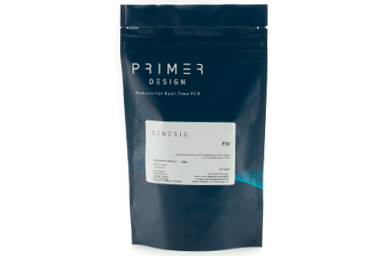
Exceptional value for money Rapid detection of all clinically relevant subtypes Positive copy number standard curve for quantification Highly specific detection profile High priming efficiency Broad dynamic detection range (>6 logs) Sensitive to < 100 copies of target
Accurate controls to confirm findings
Brucella abortus is an intracellular, blood-borne parasite. It is a Gram-negative coccobacillus that causes an infectious and contagious disease called Brucellosis. The disease primarily affects cattle but it can also be transmitted to humans from infected animals and consuming their products. The disease can lead to great economic loss especially in the dairy and agricultural industry. The Brucella abortus genome contains two DNA chromosomes in a circular confirmation; the first chromosome is approximately 2.1 Mb and the second chromosome is approximately 1.2Mb. Unusually it does not contain any plasmids or genomic islands that relate to pathogenicity and lacks many other genes that code for common virulence factors including capsules, fimbriae, exotoxins, cytolysins, resistance forms, or antigenic variation. The most common mode of transmission to humans is through the ingestion of unpasteurized milk and cheese products as the bacteria are present in the milk glands of infected female cows. In cattle transmission can also be through ingestion but in addition, the bacteria can persist in the reproductive tracts of males, namely seminal vesicles, ampullae, testicles, and epididymides, allowing sexual transmission. In humans the bacteria enter macrophages by phagocytosis and then live in compartments of vacuolar space along the endoplasmic reticulum. They persist by inhibiting host apoptosis and go onto form chronic disease causing lesions in the liver, spleen, bone marrow and kidneys. In cattle the bacteria additionally infect the trophoblast epithelial cells, which provide nutrition to the embryo. The trophoblast cells eventually lyse, releasing further bacteria into the blood stream of the embryo. The B. abortus cells in the blood stream go on to colonize the placenta and fetus in pregnant female cows, resulting in abortion of the fetus. Abortion can also result from insufficient anti-Brucella activity in the amniotic fluid. In humans, the disease can be either acute or chronic and some of the symptoms include fluctuating fever, chills, sweating, headache, muscle pain and weight loss. Once a person becomes infected they are prescribed a combination of tetracycline and streptomycin for 3-6 weeks. In cattle, additional symptoms include arthritic joints and retained after-birth.
Other Products
ChIP-Seq Library Prep Kit (illumina and MGI Platforms)
Product Info
Document
Product Info
The ChIP-Seq Library Prep Kit (illumina and MGI Platform) was developed for the construction of high quality ChIP-Seq libraries using 5 ng to 400 ng of ChIP DNA as input. The kit is compatible with ChIP DNA fragments generated from both enzymatic methods and physical methods (sonication, nebulization etc.).
ChIP-Seq Library Prep Kit Workflow
ChIP-Seq is the combination of chromatin immunoprecipitation (ChIP) with next generation sequencing. It is a powerful tool for the analysis of global transcription factors and other proteins in diseases and biological pathways, and characterization of histone modifications in a genome-wide level at single-base resolution. ChIP-Seq delivers whole genome level of functional profiling of global transcription factors, and provides better understanding of epigenetic modifications.
Three index types are available for the ChIP-Seq Library Prep Kit of the illumina platform:
Non-index (Cat.# 30032): Libraries do not have index.
Index (Cat.# 30034): Each index primer contains a unique 6-base index sequence can be used for identification. 48 samples can be pooled together. Index information can be downloaded here.
Unique dual index (Cat.# 30036): The ChIP-Seq library multiplexing for 96 samples is possible. Our unique 4-Base Difference Index System have 8 bases index length and at least 4 bases are different from each other for better library identification. Our unique dual indexing primers remove sequencing errors such as index hopping, index contamination, mis-assignment, and other errors. Index information can be downloaded here.
Indexes are available for the MGI platform kits (Cat.# 34034).
Kit advantages:
Super fast protocol
Library prep can be done in 1.5 hours
The hands-on time is only around 10 minutes
Easy procedure
Ready-to-use master mix simplified the procedure
Less reaction components make it easy to setup reactions
Reduced more than half of the beads cost
Input ChIP DNA: From 5 ng to 400 ng
Comparison of library conversion efficiency under the same condition. Input DNA amounts are 5 ng and 30 ng. BioDynami ChIP-Seq Library Prep Kit (Cat.# 30034) was used.
Comparison of aligned reads, aligned rate and duplication rate. Input DNA amounts are 5 ng and 30 ng. BioDynami ChIP-Seq Library Prep Kit (Cat.# 30034) was used.
Data comparison: Input DNA amounts are 5 ng and 30 ng. BioDynami ChIP-Seq Library Prep Kit (Cat.# 30034) was used. Sequencing peak regions are shown.
Document
The ChIP-Seq Library Prep Kit (illumina and MGI Platform) was developed for the construction of high quality ChIP-Seq libraries using 5 ng to 400 ng of ChIP DNA as input. The kit is compatible with ChIP DNA fragments generated from both enzymatic methods and physical methods (sonication, nebulization etc.).
Isolate all sizes of circulating and exosomal RNA, including microRNA
Versatile plasma/serum input ranges
No phenol extractions
No carrier RNA
Bind and elute all RNA irrespective of size or GC content, without bias
Concentrate circulating RNA and exosomal RNA into a flexible elution volume
High quality, purified RNA is suitable for a variety of downstream applications, including Small RNA Sequencing. Find out more information on Norgen’s NGS services
Compatible with Streck Cell-Free RNA BCT® Tubes
Purification is based on spin column chromatography that uses Norgen’s proprietary resin separation matrix
These kits provide a fast, reliable and convenient method to purify and concentrate high quality, high purity and inhibitor-free cell-free circulating and exosomal RNA using a convenient spin column method. These kits can purify RNA from fresh or frozen serum or plasma samples prepared from blood collected on either EDTA or Citrate. Plasma samples prepared from blood collected on heparin should not be used, as heparin can significantly interfere with many downstream applications such as RT-PCR. The purified plasma/serum RNA is fully compatible with all downstream applications including PCR, qPCR, methylation-sensitive reverse transcription qPCR, reverse transcription PCR, Northern blotting, RNase protection and primer extension, expression array assays, and NGS.
Background
Plasma/Serum cell-free circulating RNA or exosomal RNA has the potential to provide biomarkers for certain cancers and disease states. Exosomes are 40 – 150 nm membrane vesicles, which are secreted by most cell types. Exosomes can be found in saliva, blood, urine, amniotic fluid and malignant ascitic fluids, among other biological fluids. Evidence has been accumulating recently that these vesicles act as cellular messengers, conveying information to distant cells and tissues within the body. These exosomes may play a functional role in mediating adaptive immune responses to infectious agents and tumours, tissue repair, neural communication and transfer of pathogenic proteins. For this reason exosomal RNAs may serve as biomarkers for various diseases including cancer. As the RNA molecules encapsulated within exosomes are protected from degradation by RNAses they can be efficiently recovered from biological fluids, such as plasma or serum.
Plasma/Serum RNA Purification Mini Kit
This kit can purify RNA from fresh or frozen serum or plasma samples prepared from blood collected on either EDTA or Citrate, from volumes ranging from 50 µL to 200 µL. The purified plasma/serum RNA is eluted in a flexible final volume of 10 µL to 25 µL.
Plasma/Serum RNA Purification Midi Kit
This utilizes a two column method, and can purify RNA from fresh or frozen serum or plasma samples prepared from blood collected on either EDTA or Citrate, from volumes ranging from 250 µL to 1.5 mL. The first column will handle the large volume input of bodily fluids that is followed by a concentration on a mini column for a final elution of 50 µL to 100 µL.
Plasma/Serum RNA Purification Maxi Kit
This kit can purify RNA from fresh or frozen serum or plasma samples prepared from blood collected on either EDTA or Citrate, from volumes ranging from 2 mL to 5 mL. The first column will handle the large volume input of bodily fluids that is followed by a concentration on a mini column for a final elution of 50 µL to 100 µL.
*This kit is suitable for the isolation of RNA from fresh or frozen serum or plasma prepared from blood collected on either EDTA or Citrate. Plasma samples prepared from blood collected on heparin should not be used as heparin can significantly interfere with many downstream applications such as RT-PCR.
**Please check page 7 for Average Plasma/Serum Yields and Common RNA Quantification Methods.
Storage Conditions and Product Stability
All solutions should be kept tightly sealed and stored at room temperature. This kit is stable for 2 years after the date of shipment. It is recommended to warm Lysis Buffer A for 20 minutes at 60°C if any salt precipitation is observed.
Opentrons Flex 1-Channel pipettes enable highly accurate pipetting, optimized for automation.
Flex pipettes use air displacement technology to offer highly accurate pipetting with pipette volume ranges from 1 to 50 µL and 5 to 1000 μL. Smart sensors support automatic calibration, real-time positioning, and error detection. Choose the pipettes that fit your workflow — the gantry supports any two Flex 1-Channel or 8-Channel Pipettes — and swap them out yourself when your workflow changes.
Document
Opentrons Flex 1-Channel pipettes enable highly accurate pipetting, optimized for automation.
Flex pipettes use air displacement technology to offer highly accurate pipetting with pipette volume ranges from 1 to 50 µL and 5 to 1000 μL. Smart sensors support automatic calibration, real-time positioning, and error detection. Choose the pipettes that fit your workflow — the gantry supports any two Flex 1-Channel or 8-Channel Pipettes — and swap them out yourself when your workflow changes.