
Description
Specifications
| Clone | IHC538 |
| Source | Mouse Monoclonal |
| Positive Control | Tonsil, Lymph Node |
| Dilution Range | 1:200 |

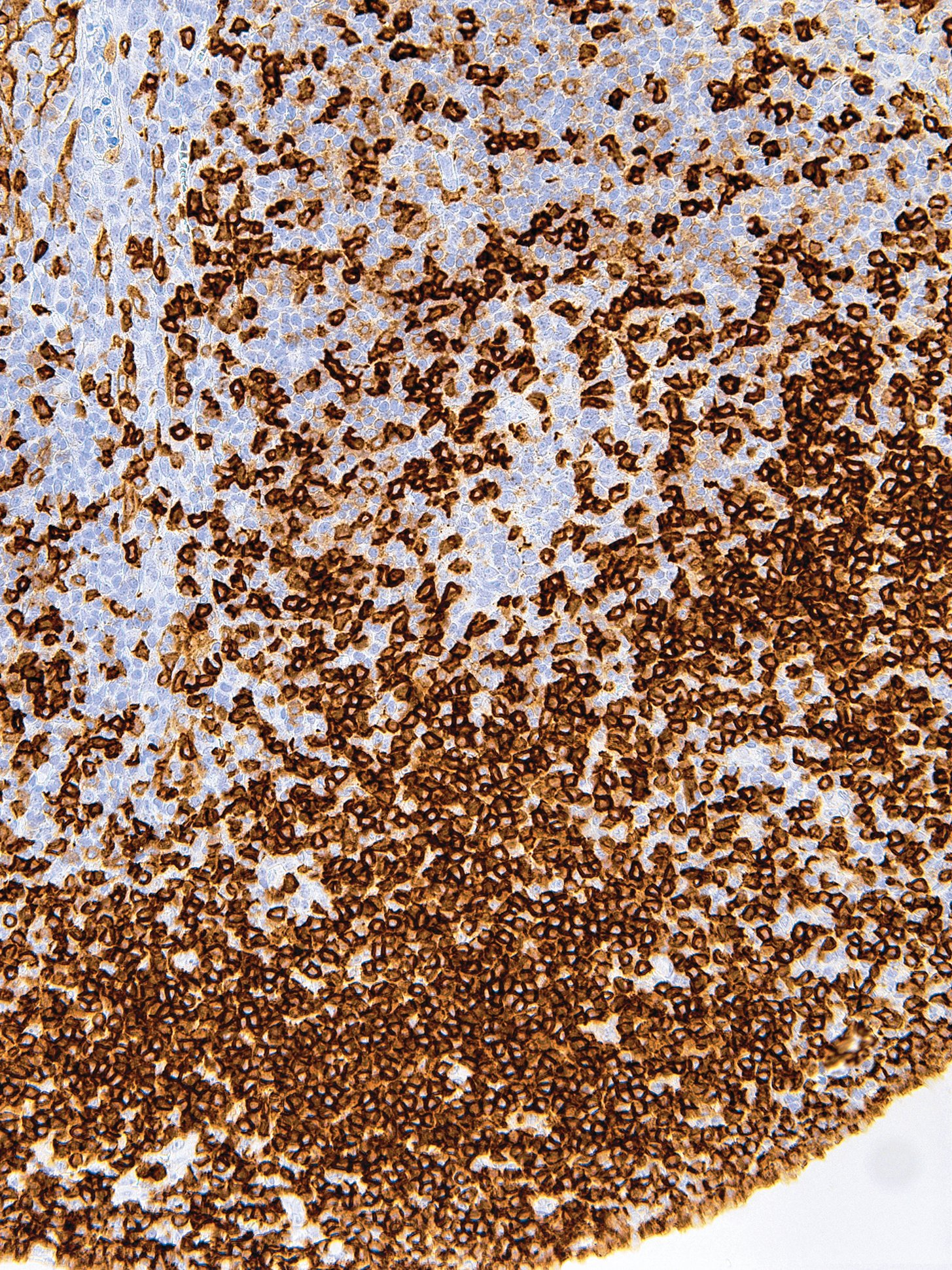
| Clone | IHC538 |
| Source | Mouse Monoclonal |
| Positive Control | Tonsil, Lymph Node |
| Dilution Range | 1:200 |


Sample type purification kit guide
The 16S V1-V3 Library Preparation Kit for Illumina consists of the reagents and components required for library preparation of the 16S V1-V3 amplicon libraries to be used for next-generation sequencing on Illumina platforms. All molecular reagents including primers, enzyme mixes, indexes, and buffers are provided. Instructions for PCR clean up with the AMPure XP Magnetic Beads (supplied by customer) are also included for rapid purification of nucleic acid products generated at two steps of the workflow. The library prep workflow could be used for purified DNA inputs from different sources including stool, soil, water, saliva, plant, urine, skin swab, vaginal swab, cheek swab, nasal swab, plasma/serum, tongue swab, gum swab, and others.
The 16S V1-V3 Library Preparation Kit for Illumina has a streamlined procedure that reduces the handling time such that the library prep procedure can be completed in approximately 4 hours (see diagram below). Input DNA is first subjected to targeted PCR to amplify the V1-V3 region of the DNA encoding 16S rRNA. The post-PCR reaction is then cleaned up using AMPure XP beads. Dual index primers are then added using a limited-cycle PCR. The indexed amplicons flanked by 5′ and 3′ barcoded adaptors are then cleaned using AMPure XP beads. The libraries are then ready for quantification, pooling and sequencing.
Figure 1 / 3
Click for expanded view
| Minimum amount of starting material: | 2.5 µL of DNA (5 ng/µL) |
| Time to complete library preparation: | 4 hours |
Storage Conditions and Product Stability
Norgen’s 16S V1-V3 Library Prep Kit for Illumina is shipped as one kit box (for the 24 prep kit) or two sub-component kits (for the 96 prep kit). All kits should be stored at -20°C upon arrival.
All kit components should remain stable for at least 1 year when stored at the specified storage conditions.
| Step | Component | Cat. 70200 (24 preps) | Cat. 70210, 70220, 70230, 70240 (96 preps) |
|---|---|---|---|
| Amplicon PCR (PCR 1) | MGX Master Mix | 330 µL | 1,320 µL |
| 16S V1-V3 Primer Mix | 70 µL | 280 µL | |
| Index PCR (PCR 2) | Indexing Master Mix | 660 µL | 2 x 1,320 µL |
| N7xx Index Primer | 50 µL | 50 µL | |
| S5xx Index Primer | 70 µL | 70 µL | |
| PCR Clean-Up | Resuspension Buffer | 2 x 1,250 µL | 2 x 5,000 µL |
| Nuclease-free water | 1,250 µL | 1 x 6,000 µL |

DBCO-PEG2-DBCO is a PEG linker containing two terminal DBCO groups. The DBCO groups is commonly used for copper-free Click Chemistry reactions due to its strain promoted high energy. The hydrophilic PEG chain allows for increased water solubility. T Reagent grade, for research purpose. Please contact us for GMP-grade inquiries.

DBCO-PEG2-DBCO is a PEG linker containing two terminal DBCO groups. The DBCO groups is commonly used for copper-free Click Chemistry reactions due to its strain promoted high energy. The hydrophilic PEG chain allows for increased water solubility. T Reagent grade, for research purpose. Please contact us for GMP-grade inquiries.