
Introduction
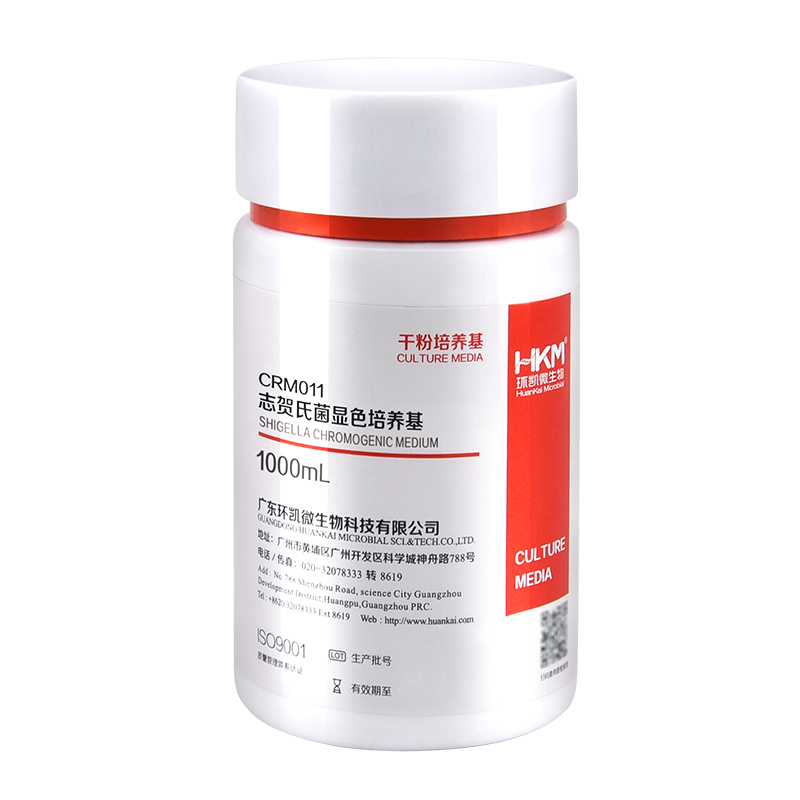
Place of Origin: Guangdong, China
Warranty: 2 years
Customized support: OEM
Brand Name: HKM
Model Number: CRM011
Reagent grade: Biochemical Reagent
Form: Powder
Color: Light yellow
Type: Shigella Agar
1000mL

Place of Origin: Guangdong, China
Warranty: 2 years
Customized support: OEM
Brand Name: HKM
Model Number: CRM011
Reagent grade: Biochemical Reagent
Form: Powder
Color: Light yellow
Type: Shigella Agar
The kit offers the unique feature to isolate total RNA including small RNA and DNA from serum and plasma without the need to resort to the cumbersome phenol/chloroform extraction or a time consuming proteinase digest. RNA purified using the kit is ready for applications such as RT-PCR, Northern blotting, poly A+ RNA (mRNA) purification, nuclease protection, and in vitro translation.
Specifications
| Features | Specifications |
| Main Functions | Isolation total RNA and miRNA from 0.2-0.6ml serum and plasma |
| Applications | |
| Purification method | Mini spin column |
| Purification technology | Silica technology |
| Process method | Manual (centrifugation or vacuum) |
| Sample type | |
| Sample amount | |
| Yield | |
| Elution volume | |
| Time per run | |
| Liquid carrying volume per column | |
| Binding yield of column |
HiPure RNA technology simplifies total RNA isolation. The sample material is denatured in Lysis Buffer. The protein is then precipitated by Protein Precipitation Solution and pelleted by centrifugation. After the removal of protein the binding conditions for nucleic acids are adjusted by adding isopropanol. Total nucleic acids are bound to the column. Optionally, DNA can be removed by an on-column DNase digest. The remaining nucleic acids are washed and eluted with minimal amounts of RNase-Free water.
Kit Contents
| Contents | R431402 | R431403 |
| Purification Times | 50 Preps | 250 Preps |
| HiPure RNA Mini Columns | 100 | 2 x 250 |
| 2ml Collection Tubes | 100 | 2 x 250 |
| Buffer CFL | 6 ml | 30 ml |
| Buffer CFP | 1.8 ml | 10 ml |
| Buffer RWC | 20 ml | 80 ml |
| Buffer RW2* | 20 ml | 2 x 50 ml |
| RNase Free Water | 10 ml | 60 ml |
Storage and Stability
The kit components can be stored at room temperature (15-25°C) and are stable for at least 18 months under these conditions.
The kit offers the unique feature to isolate total RNA including small RNA and DNA from serum and plasma without the need to resort to the cumbersome phenol/chloroform extraction or a time consuming proteinase digest. RNA purified using the kit is ready for applications such as RT-PCR, Northern blotting, poly A+ RNA (mRNA) purification, nuclease protection, and in vitro translation.
Salmonella spp. are members of the family Enterobacteriaceae. They are Gram-negative, facultatively anaerobic, flagellated, rod-shaped organisms. They are approximately 0.7 to 1.5 µm in diameter and 2 to 5 µm in length and responsible for a large number of cases of foodborne illness throughout the world. Salmonella have circular DNA genomes with a mean length of approximately 4530 kb, although this can vary by up 1000 kb. Salmonella classification is extremely complex, however, the genus is divided into two species: S. enterica and S.bongori. S. enterica is then itself divided into 6 biochemically distinct subspecies and the Salmonella genus is further classified into serovars (serotypes) based on the lipopolysaccharide (O), flagella protein (H), and sometimes the capsular (VI) antigens. There are more than 2500 known serovars and within a serovar there may be strains that differ in virulence.
Salmonella are mainly transmitted by the faecal-oral route. They are carried asymptomatically in the intestines or gall bladder of many animals, being continuously or intermittently shed in the faeces. Humans can become infected if they do not wash their hands after contact with infected animals or animal faeces. In such instances the bacteria adhere to and enter the cells of the intestinal epithelium. The toxins produced by the bacteria can damage and kill the cells that line the intestines, which results in intestinal fluid loss. The bacteria can survive for weeks in a dry environment and far longer in water thus they are frequently present in polluted waters. Salmonella can also be carried latently in the mesenteric lymph nodes or tonsils; these bacteria are not shed, but can become reactivated after stress or immunosuppression. In addition, fomites and vectors can spread Salmonella and vertical transmission occurs in birds, with contamination of the vitalize membrane, albumen and possibly the yolk of eggs. Salmonella spp. can also be transmitted in utero in mammals.
There are two different disease conditions that are distinct to salmonellosis; gastroenteritis and enteric typhoid fever. The gastroenteritis is a nonsystemic infection of the intestinal tract and regional lymph nodes that gives rise to headache, muscle aches, diarrhoea, vomiting, abdominal cramping, chills, fever, nausea and dehydration. In contrast, the enteric typhoid fever is a systemic disease in which the microorganism replicates within the cells of the reticuloendothelial system. The symptoms usually appear 6 to 72 hours after ingesting contaminated food although individuals can be infected with the bacteria without having symptoms. Those with and without symptoms shed the bacteria in their stool and it is important that personal hygiene be maintained at all times.
Exceptional value for money
Rapid detection of all clinically relevant subtypes
Positive copy number standard curve for quantification
Highly specific detection profile
High priming efficiency
Broad dynamic detection range (>6 logs)
Sensitive to < 100 copies of target
Accurate controls to confirm findings
Nucleic acid testing (NAT) is the method of choice for detection and quantification of a wide range of micro organisms. Primerdesign manufactures and supplies high quality quantitative real-time PCR kits for the detection and simultaneous quantification of numerous significant pathogens . A copy number standard curve is provided for quantification and an the internal extraction template (DNA or RNA), controls for the quality of the nucleic acid extraction and eliminates false negative results.
The kit is designed with the broadest possible detection profile to ensure that all clinically relevant strains and subtypes are detected. Target sequences are selected by working with data from key opinion leaders in the field. Multiple sequence alignments and unprecedented real-time PCR expertise in design and validation ensure the best possible kit. Details of the target and priming specificity are included in the individual handbooks above.
Packaged, optimised and ready to use. Expect Better Data.
Exceptional value for money
Rapid detection of all clinically relevant subtypes
Positive copy number standard curve for quantification
Highly specific detection profile
High priming efficiency
Broad dynamic detection range (>6 logs)
Sensitive to < 100 copies of target
Accurate controls to confirm findings
150 reactions