
Introduction
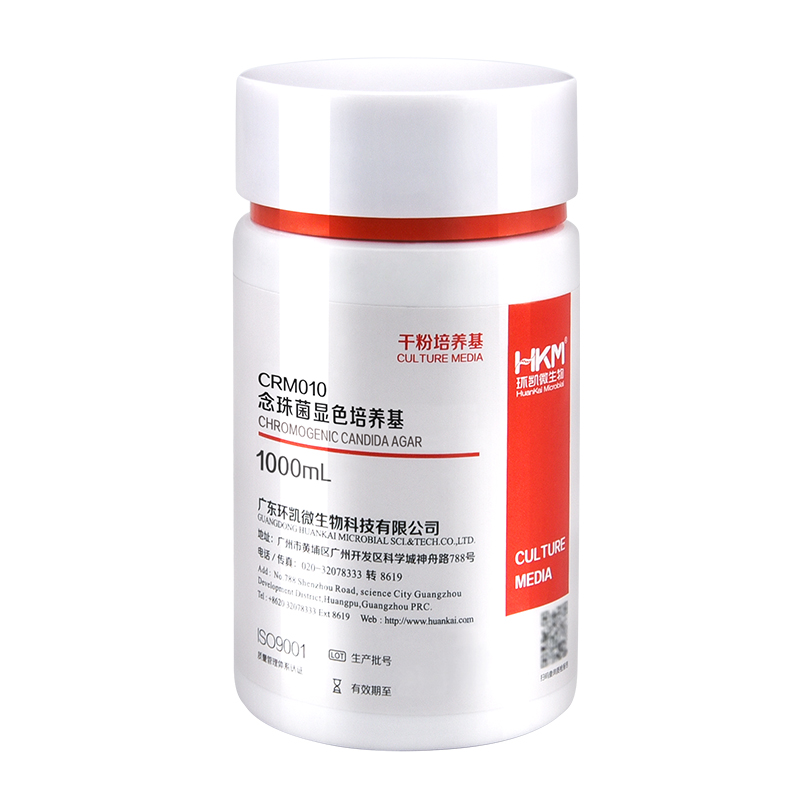
Place of Origin: Guangdong, China
Warranty: 2 years
Customized support: OEM
Brand Name: HKM
Model Number: CRM010
Reagent grade: Biochemical Reagent
Form: Powder
Color: Light yellow
Type: Candida Agar

Place of Origin: Guangdong, China
Warranty: 2 years
Customized support: OEM
Brand Name: HKM
Model Number: CRM010
Reagent grade: Biochemical Reagent
Form: Powder
Color: Light yellow
Type: Candida Agar

Propane-1,3-(PEG12-DBCO),2-alcohol is a PEG linker containing two DBCO moieties and a terminal primary hydroxyl group. The hydroxyl can react with a variety of functional groups and the hydrophilic PEG spacer arm can provide better solubility to labeled molecules. DBCO is commonly used for copper-free Click Chemistry reactions. Reagent grade, for research use only.

Propane-1,3-(PEG12-DBCO),2-alcohol is a PEG linker containing two DBCO moieties and a terminal primary hydroxyl group. The hydroxyl can react with a variety of functional groups and the hydrophilic PEG spacer arm can provide better solubility to labeled molecules. DBCO is commonly used for copper-free Click Chemistry reactions. Reagent grade, for research use only.

Propargyl-PEG4-(CH2)3-CO2H is a linker containing a propargyl group at one end and a carboxylic acid at the other end. The carboxylic acid reacts with amine groups in the presence of activators (EDC or HATU). Under the catalyzation of copper, the propargyl group forms linkage with azide group of biomolecules. Reagent grade, for research purpose. Please contact us for GMP-grade inquiries.

Propargyl-PEG4-(CH2)3-CO2H is a linker containing a propargyl group at one end and a carboxylic acid at the other end. The carboxylic acid reacts with amine groups in the presence of activators (EDC or HATU). Under the catalyzation of copper, the propargyl group forms linkage with azide group of biomolecules. Reagent grade, for research purpose. Please contact us for GMP-grade inquiries.

Magnetic bead nucleic acid purification technology uses nano or micron superparamagnetic material as the matrix, generally black ferric oxide or yellowish brown ferricoxide as the magnetic material. The surface of bead is coated with appropriate functional groups, which can adsorb nucleic acid. Magnetic beads commonly used for nucleic acids, containing carboxyl groups, hydroxyl groups, or silicon groups. Silicon-based magnetic beads are the most common, and its principle of adsorbing nucleic acid is consistent with the classical glass milk purification technology or glass fiber filter membrane purification method. Magpure particle is a kind of polydisperse fast speed silica magnetic beads. The core is ferricoxide, accounting for 50%, and the surface coating is silica, accounting for 50%. The product can be used for plasmid extraction, gel DNA recovery, product purification, genomic DNA and RNA extraction, and viral nucleic acid extraction.
Specifications
| Features | Specifications |
| Concentration | 10 mg/ml |
| Appearance | Suspension of yellowish brown particles |
| Surface functional group | Carboxyl, COOH |
| Dispersibility | Monodisperse, spherical |
| Particle size | 0.8-1 μm |
| Preservation conditions | Room temperature, valid for up to 2 years.It is recommended to store in 2-8°C to prevent microbial growth. |
| Magnetic response speed | 120 seconds |
| Settling velocity | >2 hours |
| High salt mediated binding | No adsorption |
| Alcohol mediated binding | 1M NaClO4/ethanol(50%), DNA/RNA recovery up to 90% |
| PEG8000 mediated binding | The recovery of DNA/RNA was up to 90% |
| DNase/RNase | Not detected |
| DNA residue | Not detected |
| Recommended application | Plasmid extraction, gel DNA recovery, genomic DNA extraction and RNA extraction. |
Principle
Highsalt mediated binding: in the solution containing 2-4M guanidine isothiocyanate, Magpure particles can selectively recover DNA molecules, and impurities such as protein polysaccharides are not adsorbed.
Alcohol mediated binding: in the solution containing guanidine salt and alcohol (>25%), Magpure particles can selectively recover DNA/RNA molecules, and proteins and other impurities are not adsorbed.
After biological samples are treated with digestive solution or lysis Buffer, DNA/RNA is released from cells, organelles and protein complexes (ribosomes and nucleosomes) into reagents. After Magpure particles and binding solution are added, DNA/RNA is adsorbed to the surface of Magpure particles to form DNA/RNA bead complex. Under the action of the magnetic field, the magnetic beads are separated and collected, and the impurities such as protein are removed with the waste liquid. After two or three steps of further cleaning, the DNA/RNA magnetic bead complex is resuspended in sterilized water or TE buffer, and the DNA/RNA falls off from the surface of the magnetic beads, so as to achieve the purpose of purification.
Ordering information
| CAT.No. | Product Name | Package |
| C14130 | MagBind Particles | 10 ml |
| C14131 | MagBind Particles | 100 ml |
| Features | MagPure Particles | MagPure Particles N | MagPure Particles G | MagPure Particles F | MagBind Particles |
| Cat.No. | C1410 | C1411 | C1412 | C1414 | C1413 |
| Concentration | 100mg/ml | 70mg/ml | 40mg/ml | 50mg/ml | 10mg/ml |
| Form | Amorphous and Porous | Amorphous and Porous | Porous | Amorphous | Nonporous |
| Surface function | Si-OH, Silica Beads | Si-OH, Silica Beads | Si-OH, Silica Beads | Si-OH, Silica Beads | COOH, Carboxyl Beads |
| Dispersion | Polydisperse | Polydisperse | Monodisperse | Monodisperse | Monodisperse |
| Particle Size | 1.5-5μm | 0.2-2μm | 1-1.5μm | 0.2-1.5μm | 0.8-1μm |
| Color | Black | Yellowish Brown | Dark Brown | Dark Brown | Yellowish Brown |
| Magnetic response | 15-30s | ~60s | ~30s | 20s | 120s |
| Settling Time (1ml) | >5min | >10min | >3min | >3min | >2h |
| Usage (0.2ml Sample) | 20μl | 20μl | 20-30μl | 20-30μl | 20-30μl |
| DNA Recover Rate (only 4M GITC) | >80% | >80% | >80% | >80% | 0 |
| DNA Recover Rate (10% PEG8000/NaCl) | >85% | >85% | >85% | >85% | >90% |
| Recommended Use | gDNA/RNA Isolation from Blood, Tissue, Plant, Swab, Spots, Stool, Soil and etc.Viral DNA/RNA IsolationAgarose Gel DNA Purification | DNA/RNA Isolation from low nucleic acid content samplesPlasmid IsolationDNA/RNA Clean Up | Circulating DNA IsolationViral Nucleic acid IsolationgDNA Isolation FFPE DNA/RNA Isolation | Plasmid extractiongel DNA recoverygenomicDNA/RNA extraction viral nucleic acid extractionCirculating DNA extraction | DNA/RNA Clean Up and concentrationDNA/RNA Isolation from low nucleic acid content samplesResearch immuno assays |
Magnetic bead nucleic acid purification technology uses nano or micron superparamagnetic material as the matrix, generally black ferric oxide or yellowish brown ferricoxide as the magnetic material. The surface of bead is coated with appropriate functional groups, which can adsorb nucleic acid. Magnetic beads commonly used for nucleic acids, containing carboxyl groups, hydroxyl groups, or silicon groups. Silicon-based magnetic beads are the most common, and its principle of adsorbing nucleic acid is consistent with the classical glass milk purification technology or glass fiber filter membrane purification method. Magpure particle is a kind of polydisperse fast speed silica magnetic beads. The core is ferricoxide, accounting for 50%, and the surface coating is silica, accounting for 50%. The product can be used for plasmid extraction, gel DNA recovery, product purification, genomic DNA and RNA extraction, and viral nucleic acid extraction.