
Introduction
029140 Benedict Reagent
Usage:For Gluconate Test.
Specification: 10ml.

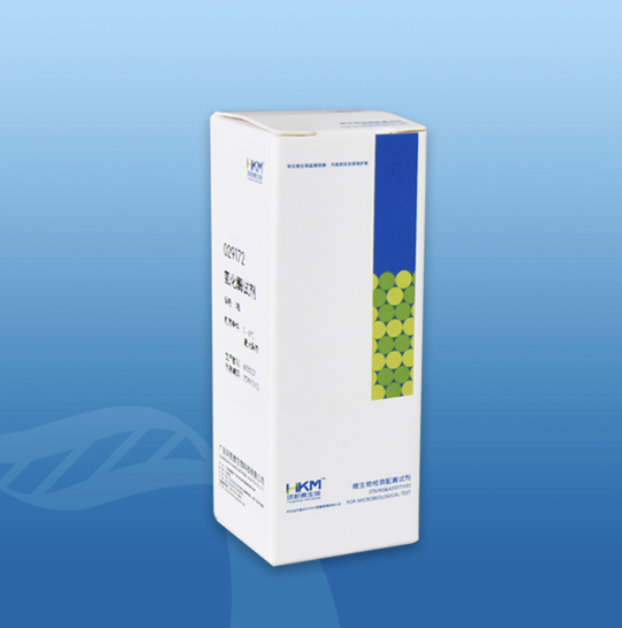
029140 Benedict Reagent
Usage:For Gluconate Test.
Specification: 10ml.

Water-soluble, substrate for sortase mediated labeling of proteins. Sortase catalyzes a transpeptidase reaction between a specific internal sequence of a protein and an amine group present on the N-terminus of triglycine recently has become an area of great interest. This method of labeling proteins has been denoted as “Sortagging”. Proteins conjugated to DBCO-Gly-Gly-Gly can be further modified with azide-containing molecules creating site-specific protein conjugates. Examples of creating protein conjugates using sortagging include site-specifically PEGylating proteins,1 site-specific protein-lipid conjugates,2 and constructing peptides and glycosylphosphatidylinositol chimeras.3 Sortase has also been used in peptide synthesis to cyclize peptides to create macrocyclic peptides, glycopeptides4 and protein−protein conjugates.

Water-soluble, substrate for sortase mediated labeling of proteins. Sortase catalyzes a transpeptidase reaction between a specific internal sequence of a protein and an amine group present on the N-terminus of triglycine recently has become an area of great interest. This method of labeling proteins has been denoted as “Sortagging”. Proteins conjugated to DBCO-Gly-Gly-Gly can be further modified with azide-containing molecules creating site-specific protein conjugates. Examples of creating protein conjugates using sortagging include site-specifically PEGylating proteins,1 site-specific protein-lipid conjugates,2 and constructing peptides and glycosylphosphatidylinositol chimeras.3 Sortase has also been used in peptide synthesis to cyclize peptides to create macrocyclic peptides, glycopeptides4 and protein−protein conjugates.

This product is suitable for rapid extraction of total DNA from tissue, cells, blood, saliva, swabs, blood spots, semen and other clinical samples. DNA can be used directly for PCR, quantitative PCR, Southern Blot, test of virus DNA and so on.
Details
Specifications
| Features | Specifications |
| Main Functions | Isolation total DNA from tissue / blood / body fluid / swab /dry blood spots |
| Applications | PCR, qPCR, southern bolt and virus detection, etc |
| Purification method | Mini spin column |
| Purification technology | Silica technology |
| Process method | Manual (centrifugation or vacuum) |
| Sample type | Tissue, cell, blood, saliva, swab, blood spot,semen and other clinical samples |
| Sample amount | Solid tissue: 1-10mg; Anticoagulant blood: 200μl |
| Elution volume | ≥20μl |
| Time per run | 30 – 60 minutes |
| Liquid carrying volume per column | 800µl |
| Binding yield of column | 100µg |
This product is based on silica Column purification. The sample is lysed and digested with lysate and protease, DNA is released into the lysate. Transfer to an adsorption column. Nucleic acid is adsorbed on the membrane, while protein is not adsorbed and is removed with filtration. After washing proteins and other impurities, Nucleic acid was finally eluted with low-salt buffer (10mm Tris, pH9.0, 0.5mm EDTA).
Kit Contents
| Contents | D301802 | D301803 |
| Purification Times | 50 | 250 |
| HiPure DNA Mini Columns I | 50 | 250 |
| 2ml Collection Tubes | 100 | 500 |
| Buffer ATL | 30 ml | 150 ml |
| Buffer AL | 30 ml | 150 ml |
| Buffer GW1 | 22 ml | 88 ml |
| Buffer GW2 | 12 ml | 50 ml |
| Proteinase K | 24 mg | 120 mg |
| Protease Dissolve Buffer | 1.8 ml | 10 ml |
| Buffer AE | 15 ml | 60 ml |
Storage and Stability
Proteinase K should be stored at 2-8°C upon arrival. However, short-term storage (up to 12 weeks) at room temperature (15-25°C) does not affect their performance. The remaining kit components can be stored at room temperature (15-25°C) and are stable for at least 18 months under these conditions. The entire kit can be stored at 2-8°C, but in this case buffers should be redissolved before use. Make sure that all buffers are at room temperature when used.
Experiment Data

This product is suitable for rapid extraction of total DNA from tissue, cells, blood, saliva, swabs, blood spots, semen and other clinical samples. DNA can be used directly for PCR, quantitative PCR, Southern Blot, test of virus DNA and so on.

Norgen’s Cells and Tissue DNA Isolation Kits are designed for the rapid preparation of genomic DNA from cultured cells as well as various tissue samples and urine. The purified genomic DNA is fully digestible with all restriction enzymes tested, and is completely compatible with PCR and Southern Blot analysis.
Cells and Tissue DNA Isolation Kit (Spin Column)
Purification is based on spin column chromatography as the separation matrix. Norgen’s columns bind DNA under optimized salt concentrations and release the bound DNA under low salt and slightly alkali conditions. The protocol can be completed in approximately 30 minutes for cells and within 90 minutes for tissues. Each kit contains sufficient materials for 50 preparations.
Cells and Tissue DNA Isolation Micro Kit (Micro)
Optimized for small inputs of cells and tissues, such as Laser-Captured Microdissection (LCM). Purification is based on spin column chromatography as the separation matrix. Norgen’s columns bind DNA under optimized salt concentrations and release the bound DNA under low salt and slightly alkali conditions. Preparation time for a single sample is approximately 60 minutes, and each kit contains sufficient materials for 50 preparations.
Cells and Tissue DNA Isolation Kit (Magnetic Bead System)
Purification is based on the use of magnetic beads that bind DNA under optimized binding conditions. Norgen’s Cells and Tissue DNA Isolation Kit (Magnetic Bead System) allows for the isolation of genomic DNA from various types of animal tissues or cell samples. Preparation for 10 purifications is approximately 40 minutes of hands-on time.
Cells and Tissue DNA Isolation 96-Well Kit (High Throughput Magnetic Bead System)
Purification is based on the use of magnetic beads that bind DNA under optimized binding conditions. Norgen’s Cells and Tissue DNA Isolation 96-Well Kit (Magnetic Bead System) allows for the isolation of genomic DNA from various types of animal tissues or cell samples. The Cells and Tissue DNA Isolation 96-Well Kit (Magnetic Bead System) also can be integrated with a robotic automation system.
Figure 1 / 9
Click for expanded view
| Kit Specifications | |
| Maximum Input | 20 mg of animal tissue Up to 150 μL of viral suspension 3 x 10⁶ cells |
| Column Binding Capacity | > 50 μg |
| Average Yield | 8 μg (from 1 x 10⁶ HeLa Cells) 10 μg (from 10 mg kidney) |
| Elution Volume | 50 – 200 μL |
| Analyte Purified | Genomic DNA, mitochondrial DNA, viral DNA |
| Format | Spin Column |
| Time to Complete 10 Purifications | 30 min (cells) and 90 min (tissue) |
Storage Conditions and Product Stability
All solutions should be kept tightly sealed and stored at room temperature. This kit is stable for 1 year after the date of shipment. The kit contains a ready-to-use Proteinase K, which is dissolved in a specially prepared storage buffer. The buffered Proteinase K is stable for up to 1 year after the date of shipment when stored at room temperature.
| Component | Cat. 53100 (50 preps) | Cat. 57300 (50 preps) | Cat. 59100 (50 preps) | Cat. 62500 (192 preps) |
|---|---|---|---|---|
| Lysis Buffer B | 20 mL | 20 mL | 20 mL | 1 x 40 mL 1 x 20 mL |
| Solution WN | 18 mL | 18 mL | 18 mL | 55 mL |
| Wash Solution A | 18 mL | 18 mL | – | – |
| Elution Buffer B | 30 mL | 8 mL | 15 mL | 1 x 30 mL 1 x 15 mL |
| Proteinase K | 1.2 mL | 1.2 mL | 1.2 mL | – |
| Proteinase K in Sotrage Buffer | – | – | – | 4 mL |
| Magnetic Bead Suspension | – | – | 2 x 1.1 mL | 8.5 mL |
| 96-Well Plate | – | – | – | 2 |
| Spin Columns | 50 | – | – | – |
| Micro Spin Columns | – | 50 | – | – |
| Collection Tubes | 50 | 50 | – | – |
| Elution Tubes (1.7 mL) | 50 | 50 | 50 | – |
| 96-Well Elution Plate | – | – | – | 2 |
| Adhesive Tape | – | – | – | 2 |
| Product Insert | 1 | 1 | 1 | 1 |