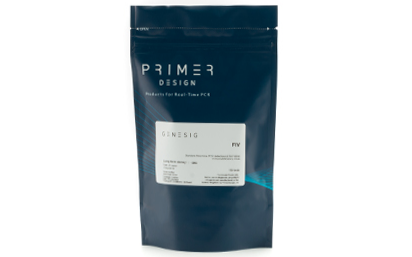
Exceptional value for money Rapid detection of all clinically relevant subtypes Positive copy number standard curve for quantification Highly specific detection profile High priming efficiency Broad dynamic detection range (>6 logs) Sensitive to < 100 copies of target
Accurate controls to confirm findings
Nucleic acid testing (NAT) is the method of choice for detection and quantification of a wide range of micro organisms. Primerdesign manufactures and supplies high quality quantitative real-time PCR kits for the detection and simultaneous quantification of numerous significant pathogens . A copy number standard curve is provided for quantification and an the internal extraction template (DNA or RNA), controls for the quality of the nucleic acid extraction and eliminates false negative results.
The kit is designed with the broadest possible detection profile to ensure that all clinically relevant strains and subtypes are detected. Target sequences are selected by working with data from key opinion leaders in the field. Multiple sequence alignments and unprecedented real-time PCR expertise in design and validation ensure the best possible kit.
Details of the target and priming specificity are included in the individual handbooks above.
Packaged, optimised and ready to use. Expect Better Data.
Other Products
HiDi® 2x PCR Master Mix
Product Info
Document
Product Info
HiDi® stands for High Discrimination of mismatches at the 3’-terminus of primers in PCR. This myPOLS Biotec enzyme family is optimized for this feature and therefor, is the first choice for applications that rely on this property such as allele-specific PCR (asPCR) that is also termed allele-specific amplification (ASA).HiDi® 2x PCR Master Mix – ready to use mix simplifies your PCR setup. Only target-specific primers and template need to be added as the mix contains all components for a successful and reliable PCR. This ensures reproducible results, significantly reduces set-up times and the risk of pipetting errors.This PCR mix is also available with a full-length Taq DNA polymerase with a nuclease domain, featuring 100% compatibility with hydrolysis probes (TaqMan® probes etc.).Benchmarking with products of competitors conducted by us and others show that the HiDi® DNA polymerase family is the first choice for highly selective PCRs, such as genotyping by allele-specific PCR, HLA genotyping, analysis of single CpG methylation sites or the detection of mutations in a high background of wild-type sequences. By using HiDi® DNA polymerase, less than 10 copies of a mutation can be detected in a background of >10.000 wild-type copies straight away without any other tedious assay optimization.It has also been shown that HiDi® DNA polymerase family is highly suitable for quality control in CRISPR-Cas or TALEN-based applications.Several independently conducted studies show that HiDi® DNA polymerase is ideally suited for use in asPCR in numerous research areas ranging from mutation detection to genome editing. (read more)For research use and further manufacturing.In case you are aiming to use our RUO products as components or for your development of e.g. an IVD medical device, please contact us.
Casestudies: HiDi® DNA Polymerase: Applications from mutation detection to genome editing (read more)
Example Primer Design
Matching vs. mismatching nucleotide is placed at the 3′-end of the primer for best discrimination results.
Example Results – There´s no accounting for taste
Cilantro: some people love it in their food, some hate it. Here we are detecting a genomic SNP (rs72921001) in HeLa genomic DNA. This SNP is reported to be close to a number of genes coding for olfactory receptors. (Reference: Eriksson N. et al. (2012), “A genetic variant near olfactory receptor genes influences cilantro preference.”)
Considering, that only the C-allele specific primer is extended and yielding in a specific amplicon, we can conclude a genetic predisposition in disliking cilantro, as this SNP is significantly associated with detecting a soapy taste to cilantro.
Allele-specific PCRs were performed from 1 ng/µl of HeLa gDNA in the presence of a realtime dye, indicating the amplification of the C-allele specific primer only. The A-allele specific primer is discriminated, thus not amplified up to 50 cycles.
PCR products were subsequently analysed on a 2.5% agarose gel. Specific product is visualized by ethidium bromide staining at the amplicon length of 109 bp.
Document
HiDi® stands for High Discrimination of mismatches at the 3’-terminus of primers in PCR. This myPOLS Biotec enzyme family is optimized for this feature and therefor, is the first choice for applications that rely on this property such as allele-specific PCR (asPCR) that is also termed allele-specific amplification (ASA).
HiDi® 2x PCR Master Mix – ready to use mix simplifies your PCR setup. Only target-specific primers and template need to be added as the mix contains all components for a successful and reliable PCR. This ensures reproducible results, significantly reduces set-up times and the risk of pipetting errors.
14 Month Validity Isothermal Amplification Kit NFO Keep Away From Light Keep Away From Light
Product Info
Document
Product Info
Product Description
Product Detail
Kit Storage and term of Validity
Storage term: stored at ≤-20℃,keep away from light, avoid heavy weight and repeated freezing and thawing.
Term of Validity: 14 months
Isothermal nucleic acid Principle Summary
The kit is based on room and constant temperature nucleic acid rapid amplification technology, its principle is that at room and constant temperature, the recombinase and primer form a protein/single-stranded nucleotide complex Rec/ssDNA, and invade the double-stranded DNA template with the help of auxiliary proteins and single-stranded binding protein SSB; then form a D-loop region at the invasion point and start to scan the DNA duplex, after finding the target region complementary to the primer and disintegration of the complex Rec/ssDNA, the polymerase also binds to the 3′ end of the primer to start the chain extension. The kit relies on the role of NFO enzyme and adds the designed specific molecular probes according to the template, and get the result by colloidal gold technology (sandwich method).
Technical Parameters:
Parameters
Details
Product Name
DNA Isothermal Amplification Kit NFO
Manufacturer
Amp-future
Storage Temperature
-20°C
Kit Components
Enzymes, Buffers ,Reagents
Packaging
48 Tests/box
Detection Limit
500-1000copies/µL
Shipping
ICE
Test Time
5-20mins
Isothermal nucleic acid Product Features
1/ High sensitivity and specificity, short reaction time.
2/ The reagent form is freeze-dried, stable and easy to operate.
3/ The reaction can be operated by metal bath and water bath pot without purchasing expensive PCR apparatus.
Isothermal nucleic acid Applications
Suitable for DNA isothermal rapid amplification kit(NFO type)
Primer: Require pair of nucleotide primers with the length of 25-35 bp.
DNA basic kit reaction temperature is 39 to 42℃ and time is 5-20 minutes.
Notes
1/ Please avoid nucleic acid contamination and set blank control during reaction due to the high sensitivity of the kit.
2/ Please take out the required quantity of MIRA reaction units for the experiment, and put the rest under storage conditions when performing the experiment.
This product is suitable for rapid extraction of RNA (include miRNA) from tissue, cells, blood, s and other clinical samples. RNA can be used directly for RT-PCR, quantitative RT-PCR, test of virus DNA and so on.
Details
Specifications
Features
Specifications
Main Functions
Isolation total RNA(miRNA)from tissue, cell using two columns and DNase plus reagent
Applications
RT-PCR, cDNA synthesis, second generation sequencing
Products
RNA, miRNA
Purification method
Mini spin column
Purification technology
Silica technology
Process method
Manual (centrifugation or vacuum)
Sample type
Clinical tissues, cells, lymphocytes
Sample amount
Tissue: <20 mgCells: <5 x 10⁶
Yield
2-50μg
Elution volume
≥30μl
Time per run
≤25 minutes
Principle
This product is based on silica column purification. Remove paraffin by Buffer DPS. Sample lysis withproteinase K digestion requires only 15 minutes. After lysis, samples are incubated at 80ºC for 15 minutes. Transfer to an adsorption column and RNA is adsorbed on the membrane, while protein is not adsorbed andis removed with filtration. After washing proteins and other impurities, RNA was finally eluted with low-saltbuffer.
Advantages
Efficient DNA removal – one step RNA extraction can effectively remove genomic DNA
High quality – one step RNA extraction reagent combined with silica gel column can obtain the highest concentration
Fast – the whole extraction only takes 15-25 minutes
Nontoxic – no toxic phenol chloroform extraction is required in the extraction
Kit Contents
Contents
IVD4121
Purification Times
50 Preps
HiPure DNA Mini Column Ⅱ
50
HiPure RNA Mini Columns
50
2ml Collection Tubes
150
Proteinase K
24 mg
Protease Dissolve Buffer
1.8 ml
DNase I
600 μl
DNase Buffer
6 ml
Buffer RTL
40 ml
RNA Digestion Buffer
15 ml
Buffer RWC*
20 ml
Buffer RW2*
20 ml
Nuclease Free Water
10 ml
Storage and Stability
Proteinase K should be stored at 2–8°C upon arrival. DNase I should be stored at -20°C. However, short-term storage (DNase I up to 1 weeks, Proteinase K up to 8 weeks) at room temperature (15–25°C) does not affect their performance. The remaining kit components can be stored at room temperature (15–25°C) and are stable for at least 18 months under these conditions.
Document
This product is suitable for rapid extraction of RNA (include miRNA) from tissue, cells, blood, s and other clinical samples. RNA can be used directly for RT-PCR, quantitative RT-PCR, test of virus DNA and so on.