
Description
Specifications
| Clone | IHC019 |
| Source | Mouse Monoclonal |
| Positive Control | Bladder, Colon Carcinoma, Colon, Thyroid Carcinoma |
| Dilution Range | 1:200 |

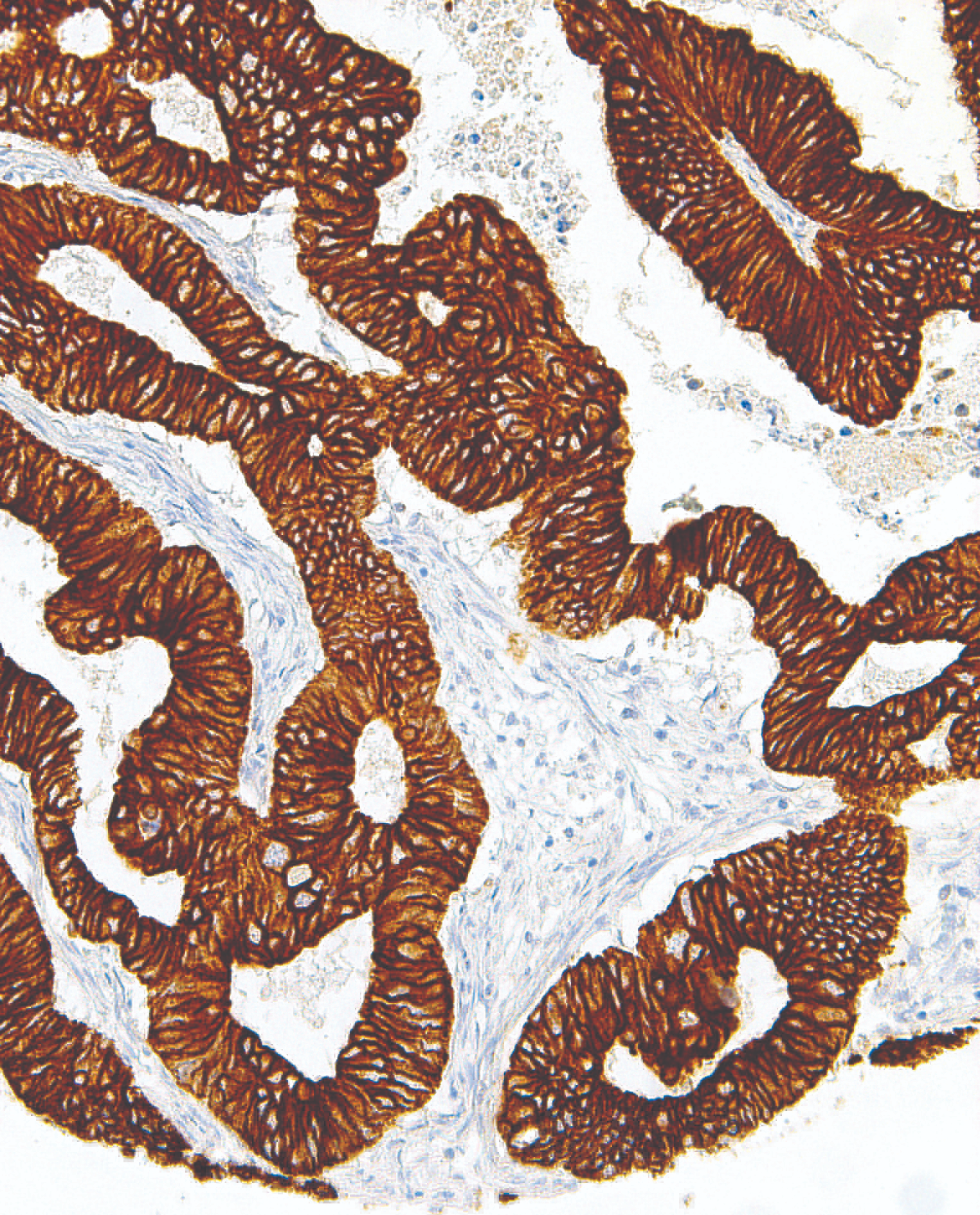
| Clone | IHC019 |
| Source | Mouse Monoclonal |
| Positive Control | Bladder, Colon Carcinoma, Colon, Thyroid Carcinoma |
| Dilution Range | 1:200 |

This kit provides a fast, reliable and simple procedure for isolating DNA from urine volumes ranging from 3 mL to 25 mL. Both high molecular weight DNA (greater than 1 kb in size; mostly cell associated) and the smaller DNA (150 – 250 bp; derived from the circulation) is effectively isolated and purified with a rapid and convenient spin column protocol. Multiple samples can be processed in 45 minutes. Salts, metabolic wastes, proteins and other contaminants are removed to yield inhibitor-free DNA for use in sensitive applications such as PCR, qPCR, DNA fingerprinting, methylation studies and more. This kit can also be used to isolate DNA from a broad range of viruses.
This kit is fully compatible with Norgen’s Urine Collection and Preservation Tubes.
Norgen’s Urine DNA Isolation Kit Dx (Slurry Format) does not provide a diagnostic result. It is the sole responsibility of the user to use and validate the kit in conjunction with a downstream in vitro diagnostic assay.
NOTE: This product is not available for sale in the United States.
Figure 1 / 3

Click for expanded view
| Kit Specifications – Spin Column | |
| Minimum Urine Input | 3 mL |
| Maximum Urine Input | 25 mL |
| Time to Complete 10 Purifications | < 30 minutes |
| Size of Urine DNA Purified | Large (> 1 kb) and small (150-250 bp) |
Storage Conditions and Product Stability
All solutions should be kept tightly sealed and stored at room temperature. All solutions and plastics can be used until the expiration date specified on their labels. It is recommended to warm Solution A and Solution B for 20 minutes at 60°C if any salt precipitation is observed
| Component | Cat. Dx48800 (50 preps) |
|---|---|
| Solution A | 18 mL |
| Solution B | 30 mL |
| Wash Solution | 22 mL |
| Elution Buffer | 6 mL |
| Mini Filter Spin Columns | 50 |
| Collection Tubes | 50 |
| Elution Tubes (1.7 mL) | 50 |
| Product Insert | 1 |

Tetra-(amido-PEG10-propargyl) is a branched crosslinker with four terminal propargyl groups. The propargyl groups can react with azide compounds or biomolecules via copper catalyzed Click Chemistry to form a stable triazole linkage.

Tetra-(amido-PEG10-propargyl) is a branched crosslinker with four terminal propargyl groups. The propargyl groups can react with azide compounds or biomolecules via copper catalyzed Click Chemistry to form a stable triazole linkage.

Product Description
RNA Amplification Kit With Improved Detection & Quantification-20°C Format Easy And Efficient
Kit Storage and term of Validity
Storage term: stored at ≤-20℃,keep away from light, avoid heavy weight and repeated freezing and thawing.
Term of Validity: 14 months
Isothermal nucleic acid Principle Summary
This kit is based on a rapid nucleic acid amplification technology at room temperature and constant temperature: at room temperature and constant temperature (generally 39 ºC~42 ºC), reverse transcriptase uses specific primers and template RNA to synthesize cDNA strands, and binds the auxiliary protein and single strand With the help of the protein, the recombinase and the primer form a complex; perform a homology search and bind the target homology domain, at this time a D-loop region is formed at the homology position and strand exchange begins; accompanied by the recombinase from the complex Upon dissociation, the polymerase also binds to the 3′ end of the primer, initiating chain extension. Relying on the action of nfo enzyme, adding specific molecular probes designed according to the template, and using colloidal gold technology (sandwich method) can detect the final result.
Isothermal nucleic acid Product Features
1/ High sensitivity and specificity, short reaction time.
2/ The reagent form is freeze-dried, stable and easy to operate.
3/ The reaction can be operated by metal bath and water bath pot without purchasing expensive PCR apparatus.
Technical Parameters:
| Parameters | Details |
|---|---|
| Product Name | RNA Isothermal Amplification Kit NFO |
| Manufacturer | Amp-future |
| Storage Temperature | -20°C |
| Kit Components | Enzymes, Buffers ,Reagents |
| Packaging | 48 Tests/box |
| Detection Limit | 500-1000copies/µL |
| Shipping | ICE |
| Test Time | 5-20mins |
Isothermal nucleic acid Applications
Suitable for RNA isothermal rapid amplification kit(NFO type)
Primer: Require pair of nucleotide primers with the length of 25-35 bp.
RNA NFO kit reaction temperature is 39 to 42℃ and time is 5-20 minutes.
Notes
1/ Please avoid nucleic acid contamination and set blank control during reaction due to the high sensitivity of the kit.
2/ Please take out the required quantity of MIRA reaction units for the experiment, and put the rest under storage conditions when performing the experiment.