
Description
Specifications
| Clone | IHC623 |
| Source | Mouse Monoclonal |
| Positive Control | Breast, Colon, Associated Adenocarcinomas |
| Dilution Range | 1:200 |

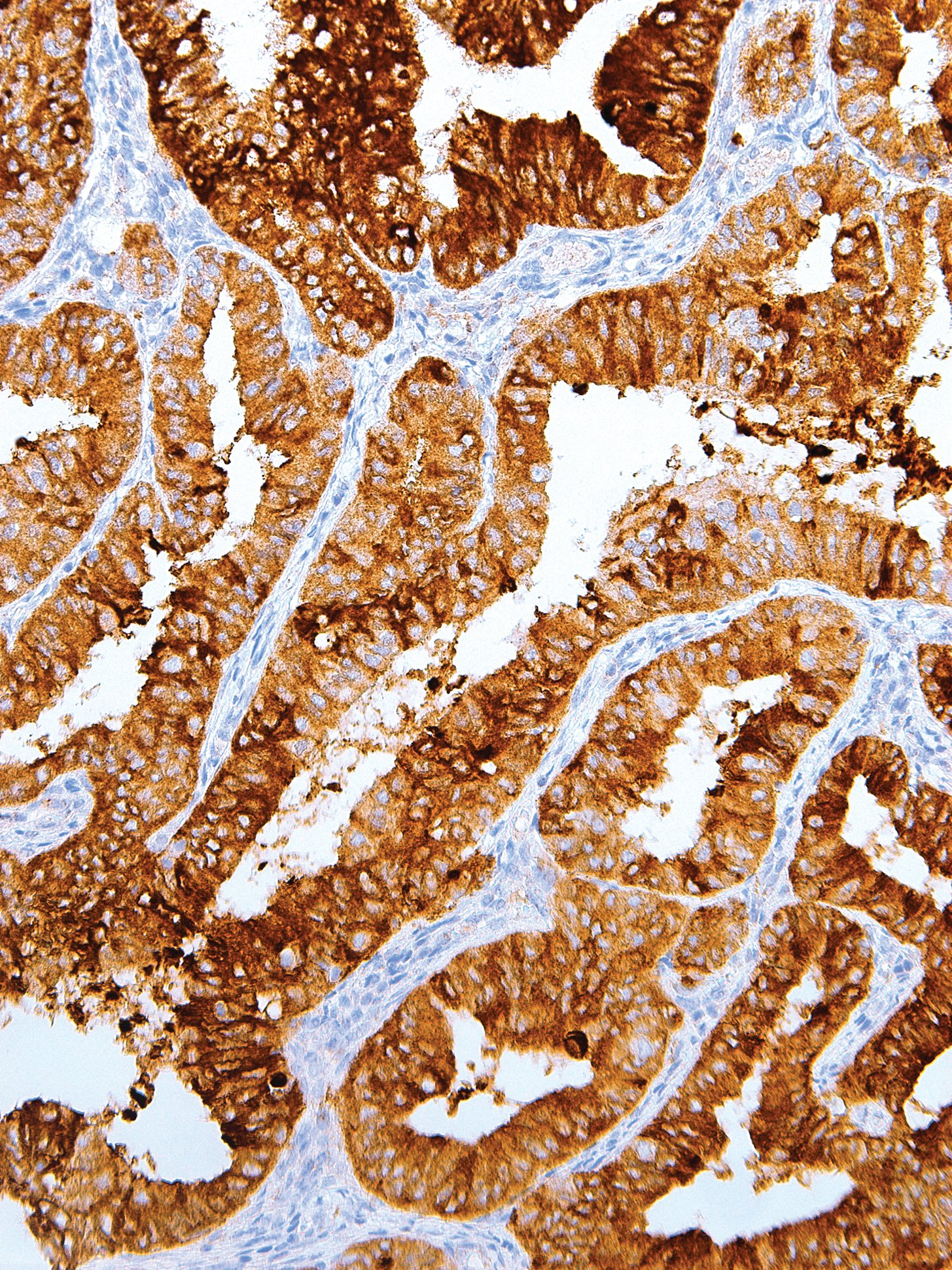
| Clone | IHC623 |
| Source | Mouse Monoclonal |
| Positive Control | Breast, Colon, Associated Adenocarcinomas |
| Dilution Range | 1:200 |

Nucleic acid testing (NAT) is the method of choice for detection and quantification of a wide range of micro organisms. Primerdesign manufactures and supplies high quality quantitative real-time PCR kits for the detection and simultaneous quantification of numerous significant pathogens . A copy number standard curve is provided for quantification and an the internal extraction template (DNA or RNA), controls for the quality of the nucleic acid extraction and eliminates false negative results.
The kit is designed with the broadest possible detection profile to ensure that all clinically relevant strains and subtypes are detected. Target sequences are selected by working with data from key opinion leaders in the field. Multiple sequence alignments and unprecedented real-time PCR expertise in design and validation ensure the best possible kit. Details of the target and priming specificity are included in the individual handbooks above.
Packaged, optimised and ready to use. Expect Better Data.
Primer and probe mix (150 reactions)
Reverse Transcription, target specific primers (RNA genome viruses only)
Copy number standard curve (sufficient for multiple standard curves)
Internal extraction control – Read through VIC channel*
Endogenous control (150 tests)
RNAse/DNAse free water
*alternative fluorophores available on request

This product is suitable for rapid extraction of DNA from FFPE sample. This kit uses two combination methods. High-salt Bind is conducive to remove pigments or polysaccharides from complex FFPE samples, so as to improve the purity of nucleic acid and avoid blocking aligent 2100. Alcohol mediated adsorption is conducive to improve the nucleic acid yield of high-yield samples.
Specifications
| Features | Specifications |
| Main Functions | Isolation high pure total DNA from FFPE using high bind beads |
| Applications | PCR and viral DNA detection, etc. |
| Purification technology | Magnetic beads technology |
| Process method | Manual or automatic |
| Sample type | Paraffin embedded tissue samples |
| Sample amount | 1-6 slices of 10-20μm |
| Elution volume | ≥30μl |
| Time per run | ≤60 minutes |
This product is based on the purification method of high binding magnetic particles. The sample is lysed and digested under the action of lysate and Protease. DNA is released into the lysate. After adding magnetic particles and binding solution, DNA will be adsorbed on the surface of magnetic particles, and impurities such as proteins will be removed without adsorption. The adsorbed particles were washed with washing solution to remove proteins and impurities, washed with ethanol to remove salts, and finally DNA was eluted by Elution Buffer.
| Contents | D632301D | D632302D |
| Purification Times | 48 Preps | 96 Preps |
| MagPure Particles N | 1.1 ml | 2.5 ml |
| RNase A | 10 mg | 20 mg |
| Proteinase K | 24 mg | 48 mg |
| Protease Dissolve Buffer | 3 ml | 6 ml |
| Buffer DPS | 60 ml | 100 ml |
| Buffer ATL | 15 ml | 30 ml |
| Buffer BST1 | 30 ml | 60 ml |
| Buffer BW1 | 13 ml | 44 ml |
| Elution Buffer | 15 ml | 30 ml |
Storage and Stability
Proteinase K, RNase A and MagPure Particles N should be stored at 2-8°C upon arrival. However, short-term storage (up to 12 weeks) at room temperature (15-25°C) does not affect their performance. The remaining kit components can be stored at room temperature (15-25°C) and are stable for at least 18 months under these conditions.
This product is suitable for rapid extraction of DNA from FFPE sample. This kit uses two combination methods. High-salt Bind is conducive to remove pigments or polysaccharides from complex FFPE samples, so as to improve the purity of nucleic acid and avoid blocking aligent 2100. Alcohol mediated adsorption is conducive to improve the nucleic acid yield of high-yield samples.

N-(Propargyl-PEG2)-PEG3-N-Boc is a branched PEG linker with an alkyne group and a t-butyl ester. The alkyne group reacts with azide-bearing compound in coppper catalyzed azide-alkyne Click Chemistry reaction. The Boc group can be deprotected under acidic conditions. The amino group is reactive with carboxylic acids, activated NHS esters, and carbonyls. Reagent grade, for research purpose.

N-(Propargyl-PEG2)-PEG3-N-Boc is a branched PEG linker with an alkyne group and a t-butyl ester. The alkyne group reacts with azide-bearing compound in coppper catalyzed azide-alkyne Click Chemistry reaction. The Boc group can be deprotected under acidic conditions. The amino group is reactive with carboxylic acids, activated NHS esters, and carbonyls. Reagent grade, for research purpose.