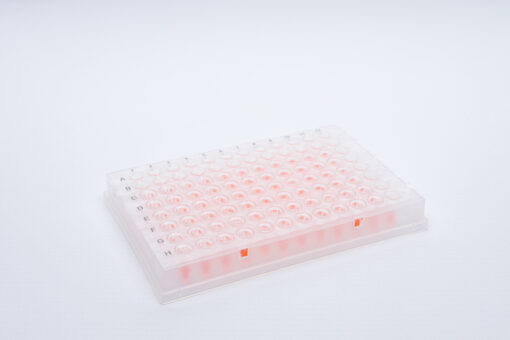
Perforated heat sealing film which is optically clear. This seal has 3 mm slits for gas transfer; is suitable for insect studies and seed storage too.
Detail
Overview
Perforated heat sealing film which is optically clear. This seal has 3 mm slits for gas transfer; is suitable for insect studies and seed storage too.
Heat sealing is a quick and cost effective method of plate sealing
Our ClearASeal Perf Heat Seal is based on our ClearASeal Peel, with the addition of 3 mm slits across the width of the seal
These slits render the seal gas permeable, whilst retaining evaporation to a minimum, compared to the use of lids
The ClearASeal Perf Heat Seal is compatible with polypropylene, polyethylene, polystyrene and cyclic olefin copolymer (COC) plates
The Seal has a wide seal integrity temperature range, from -80 °C to 110 °C
It can be used for insect and seed storage, as it enables gas exchange, whilst providing an inert surface with no adhesive to interfere with the well contents
This seal is available as sheets, for use with manual and semi-automated sealers, such as our HeatASeal 500 Sealing Machine
Also available in roll format compatible with specified automated heat sealers, such as our Wasp or Chameleon XT
Attogene’s Montmorillonite Bentonite Clay binds toxins with high affinity and high capacity. Montmorillonite has been shown to be the active ingredient in bentonites. The proposed mechanism of action of Attogene’s Montmorillonite Bentonite Clay is through the adsorption of toxins (mainly onto the interlayer spaces of montmorillonite). Attogene’s Montmorillonite Bentonite Clay is a common anti-caking agent in animal feeds to adsorb aflatoxins and diminish their bioavailability. Its composite for application in drug system can be formed through the utilization of anionic, cationic, and nonionic surfactants.
Bentonite is a promising rock of clay which is found in nature. It is a major source of montmorillonite in nature. It is a rock produced of highly colloidal and plastic clays mainly comprised of montmorillonite. In addition to montmorillonite, bentonite may compose of some amount of crystalline quarz, cristobalite, and feldspar. Montmorillonite nanoclay is used as a drug carrier system and as an additive. Its composite for application in drug system can be formed through the utilization of anionic, cationic, and nonionic surfactants. These are used to improve basal spacing resulting in organo clay to be utilised in drug loading and drug release.
Document
Promotes flocculation of cyanobacteria cell debris, binds residual phosphate compounds and promotes gradual settling of the cyanobacterial biomass on the sediment.
HiPure DNA Clean Up Kit usesproprietary chemistry and HiPure technology to recover DNA Fragments between20bp-20kbp with yields exceeding 80%. DNA is suitable for ligations, PCR, sequencing,restriction digestion, or various labeling reactions. In addition, this kit canbe also used to recover DNA directly from enzymatic reactions such as PCR andenzyme digestion reactions.
Details
Specifications
Features
Specifications
Main Functions
Recover DNA fragments between 20bp-20kbp from crude DNA and enzymatic reaction solution
Applications
PCR, sequencing, labeling reactions, ligations and restriction digestion, etc.
Purification method
Mini spin column
Purification technology
Silica technology
Process method
Manual (centrifugation or vacuum)
Sample type
Crude DNA, enzymatic reaction solution
Sample amount
<150μl
Recovery
80%
Elution volume
≥15μl
Time per run
≤10 minutes
Liquid carrying volume per column
800µl
Binding yield of column
20µg
Principle
The HiPure system uses a simple bind-wash-elute procedure. Gelslices are dissolved in a buffer containing a pH indicator, allowing easy determination of the optimal pH for DNA binding, and the mixture is applied to the column. Nucleic acids adsorb to the silica-gel membrane in the high-salt conditions provided by the buffer. Impurities are washed away and pure DNA is eluted with a small volume of low-salt buffer provided or water, ready to use in subsequent applications.
Advantages
High recovery efficiency – up to 80% DNA recovery
Fast – isolation can be completed in 10 minutes by column gel method
Low elution volume – elution volume can be as low as 10μl
Efficient – efficient removal of various inhibitory factors
Kit Contents
Contents
D214102
D214103
Purification Times
100 Preps
250 Preps
Buffer GWP
30 ml
60 ml
Buffer DW2
20 ml
50 ml
Elution Buffer
30 ml
60 ml
HiPure DNA Mini Columns I
50
250
2 ml Collection Tubes
50
250
Storage and Stability
HiPure DNA Clean Up Kit components are guaranteed for at least one year when stored at room temperature. If any precipitates form in the buffers, warm at 37℃ to dissolve.
Document
HiPure DNA Clean Up Kit usesproprietary chemistry and HiPure technology to recover DNA Fragments between20bp-20kbp with yields exceeding 80%. DNA is suitable for ligations, PCR, sequencing,restriction digestion, or various labeling reactions. In addition, this kit canbe also used to recover DNA directly from enzymatic reactions such as PCR andenzyme digestion reactions.
Programmed Death-Ligand 1 (PD-L1), also known as CD274 or B7 Homolog 1 (B7-H1), is a transmembrane protein involved in suppressing the immune system and rendering tumor cells resistant to CD8 T cell-mediated lysis through binding of the Programmed Death-1 (PD-1) receptor. Overexpression of PD-L1 may allow cancer cells to evade the actions of the host immune system. In renal cell carcinoma, upregulation of PD-L1 has been linked to increased tumor aggressiveness and risk of death, and, in ovarian cancer, higher expression of this protein has lead to significantly poorer prognosis. PD-L1 has also been linked to systemic lupus erythematosus and cutaneous melanoma. When considered in adjunct with CD8 tumor-infiltrating lymphocyte density, expression levels of PD-L1 may be a useful predictor of multiple cancer types, including stage III non-small cell lung cancer, hormone receptor negative breast cancer, and sentinel lymph node melanoma.