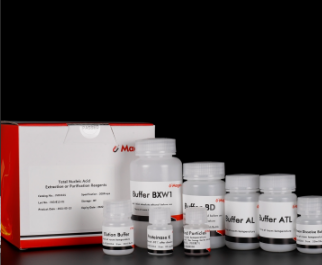
This product is suitable for rapid extraction of DNA from tissue, cells, blood, saliva, swabs, blood spots, semen and other clinical samples. DNA can be used directly for PCR, quantitative PCR, Southern Blot, test of virus DNA and so on.
Detail
Introduction
This product is suitable for rapid extraction of DNA from tissue, cells, blood, saliva, swabs, blood spots, semen and other clinical samples. DNA can be used directly for PCR, quantitative PCR, Southern Blot, test of virus DNA and so on.
Details
Specifications
Features
Specifications
Main Functions
Isolation total DNA from 1-100ul blood, FFPE, tissue and other samples
Applications
Second generation sequencing, PCR, real timePCR, etc.
Purification method
Monodisperse magnetic beads
Purification technology
Magnetic beads technology
Process method
Manual or automatic
Sample type
Anticoagulant blood, concentrated blood, buffy coat, lymphocytes and cultured cells
Sample amount
Body fluid : 10 – 200μl, Tissue : ≤10mg
Yield
10ng – 15μg
Elution volume
80 -100μl
Time per run
Principle
This product is based on the purification method of high binding magnetic particles. The sample is lysed and digested under the action of lysate and Protease. DNA is released into the lysate. After adding magnetic particles and binding solution, DNA will be adsorbed on the surface of magnetic particles, and impurities such as proteins will be removed without adsorption. The adsorbed particles were washed with washing solution to remove proteins and impurities, washed with ethanol to remove salts, and finally DNA was eluted by Elution Buffer.
Advantages
High binding force – suitable for handling DNA rich samples, such as whole blood, buffy coat, concentrated blood, etc.
High purity – carboxyl magnetic beads with weak surface adsorption, getting higher purity
General – can be used for various clinical samples
Kit Contents
Contents
IVD3101
Purification Times
200
MagBind Particles
4.5 ml
Proteinase K
90 mg
Protease Dissolve Buffer
10 ml
Buffer ATL
60 ml
Buffer AL
60 ml
Buffer BD*
20 ml
Buffer BXW1*
110 ml
Elution Buffer
30 ml
Storage and Stability
Proteinase K, MagBind Particles should be stored at 2–8°C upon arrival. However, short-termstorage (up to 18 weeks) at room temperature (15–25°C) does not affect their performance. The remainingkit components can be stored dry at room temperature (15–25°C) and are stable for at least 18 months under these conditions.
Other Products
Total Dietary Fiber Assay Kit
Product Info
Document
Product Info
K-TDFR-200A
SKU: 700004347
Content:
100 assays / 200 assays
Shipping Temperature:
Ambient
Storage Temperature:
Short term stability: 2-8oC, Long term stability: See individual component labels
Stability:
> 2 years under recommended storage conditions
Analyte:
Dietary Fiber
Assay Format:
Enzymatic
Detection Method:
Gravimetric
Signal Response:
Increase
Limit of Detection:
0.5 g/100 g
Total Assay Time:
~ 100 min
Application examples:
Food ingredients, food products and other materials.
Method recognition:
AACC Method 32-05.01, AACC Method 32-06.01, AACC Method 32-07.01, AACC Method 32-21.01, AOAC Method 985.29, AOAC Method 991.42, AOAC Method 991.43, AOAC Method 993.19, CODEX Method Type I and GB Standard 5009.88-2014
The Total Dietary Fiber Assay Kit for the analysis of Total, Soluble and Insoluble Dietary Fiberaccording to AOAC and AACC approved methods.
Dietary fiber can generally be described as the carbohydrate content of food that is not digested in the human small intestine. It passes into the large intestine where it is partially or fully fermented. These characteristics of dietary fiber are associated with its numerous well documented health benefits.
Dietary Fiber is a mixture of complex organic substances, including hydrophilic compounds, such as soluble and insoluble polysaccharides and non-digestable oligosaccharides, as well as a range of non-swellable, more or less hydrophobic, compounds such as cutins, suberins and lignins. The procedures for the determination and analysis of total dietary fiber as outlined in our assay protocol are based on the methods of Lee et al.1 and Prosky et al.2,3 (AOAC 991.43, AOAC 985.29, AACC 32-07.01 and AACC 32-05.01). However, the enzymes in the Megazyme Total Dietary Fiber Kit can also be used in other dietary fiber analytical methods such as AACC Method 32-21.01 and AACC Method 32-06.01.
1. Association of Official Analytical Chemists. (1985). Official Methods of Analysis, 14th ed., 1st suppl. Secs. 43, A14-43, A20, p.399. 2. Association of Official Analytical Chemists. (1986). Changes in methods. J. Assoc. Off. Anal. Chem., 69, 370. 3. Association of Official Analytical Chemists. (1987). Changes in methods. J. Assoc. Off. Anal. Chem., 70, 393.
See General Referee Reports: Journal of AOAC INTERNATIONAL, Vol. 81, No. 1, 1998.
Two separate methods are described in the associated assay protocol:
METHOD 1: DETERMINATION OF TOTAL, SOLUBLE AND INSOLUBLE DIETARY FIBER Based on AOAC Method 991.43 “Total, Soluble, and Insoluble Dietary Fiber in Foods” (First Action 1991) and AACC Method 32-07.01 “Determination of Soluble, Insoluble, and Total Dietary Fiber in Foods and Food Products” (Final Approval 10-16-91).
METHOD 2: DETERMINATION OF TOTAL DIETARY FIBER Based on AACC method 32-05.01 and AOAC Method 985.29.
Note that a letter of endorsement from the original method developer, Dr. Leon Prosky, is included in the Documents Tab.
Methylation Specific Bisulfite Seq Library Prep Kit
Product Info
Document
Product Info
Bisulfite seq is a well know technology to detect DNA methylation and several technologies such as WGBS, RRBS, MeDIP-Seq, and MSBS are used for whole genome DNA methylation analysis. DNA methylation is important for regulation of cell development, differentiation and gene expression in molecular biology, genetics and epigenetics. Most methylated cytosines are found at CpG sites, and 70-80% of cytosines are methylated. The number of CpG sites in human genome is around 28 million, which is less than 1% of the genome compared with 4.4% expected.
Whole genome bisulfite sequencing (WGBS) is the most effective method of DNA methylation analysis. The only limitation is the sequencing cost is very high because the whole genome is sequenced including all the non-methylated regions.
Reduced Representation Bisulfite Sequencing (RRBS) is the reduced representation of a smaller fraction of the methylated CpG sites. RRBS combines restriction enzyme digestion and bisulfite sequencing, and enriches the sequencing for methylated CpG sites. It is an efficient technology for estimate the whole genome methylation patterns at the single base level. Although this allows a higher coverage depth and reduces the sequencing cost, the limitation is only 10% of the methylated CpG sites are covered.
Methylated DNA Immunoprecipitation Sequencing (MeDIP-Seq) is another whole genome enrichment technique used for selection of methylated DNA. Using antibodies against 5-methylcytosine, methylated DNA is enriched from whole genomic DNA via immunoprecipitation. 5-methylcytosine antibodies are incubated with fragmented genomic DNA and precipitated, followed by DNA purification and sequencing. There are several drawbacks of MeDIP-Seq: 1. Low resolution (150~200 bp) as opposed to the single base resolution; 2. Non-specific interaction due to antibody specificity and selectivity. 3. Bias towards hypermethylated regions.
The Methylation Specific Bisulfite Seq (MSBS) Library Prep Kit (illumina platform) was developed for construction of NGS libraries for methylated CpG sites using bisulfite treated DNA (20 ng – 500 ng) as input. The kit enriches methylated CpG regions, thus significantly reduce the sequencing cost. The kit estimates the whole genome methylation patterns at the single base level since it is based on a bisulfite-seq technology.
It is known that bisulfite treatment of completed NGS libraries causes tremendous damage to the libraries. By using bisulfite treated DNA as input, the kit overcomes the significant library loss due to the bisulfite conversion. The kit contains a mixture of PCR polymerases that have high-fidelity amplification and uracil tolerance which is ideal for bisulfite treated DNA.
Methylation Specific Bisulfite Seq Library Prep Kit Workflow
Three index types are available for the kit:
Non-index (Cat.# 30101): Libraries do not have index.
Index (Cat.# 30102): Each primer contains a unique barcode sequence of 6 bases to identify the individual library. Library multiplexing capacity is up to 48 samples. Index information can be downloaded here.
Unique dual index (Cat.# 30103): The multiplexing of bisulfite sequencing library is up to 96 samples with unique dual indexes. We used a Four-Base Difference Index System to generate indexes that have at least 4 bases different from each other in the 8-base index. The index primers remove NGS errors including index cross-contamination, index hopping, reads mis-assignment etc. Index information can be downloaded here.
Methylation Specific Bisulfite Seq advantages
Enrichment of methylated CpG sites
Single-base resolution
Low cost for sequencing
Fast
Total time: 1.5 hours
Hands-on time: 10 minutes
Simple workflow
Bisulfite treated DNA as input: From 20 ng to 500 ng
MSBS Library Prep Kit enriches CpG sites
High methylation regions and low methylation regions in human genome.
High methylation region in human genome.
Low methylation region in human genome.
Sequencing setting: Single-end 35 cycles (Read 1, 35 bases) recommended To maximize the methylated CpG enrichment, we recommend to sequence the MSBS libraries with single end 35 cycles (read1, 35 bases). This is because the enriched methylated CpG sites are mainly located around the beginning of read 1 sequences. Shorter single end reads tend to have better methylated CpG enrichment.
Document
Bisulfite seq is a well know technology to detect DNA methylation and several technologies such as WGBS, RRBS, MeDIP-Seq, and MSBS are used for whole genome DNA methylation analysis. DNA methylation is important for regulation of cell development, differentiation and gene expression in molecular biology, genetics and epigenetics. Most methylated cytosines are found at CpG sites, and 70-80% of cytosines are methylated. The number of CpG sites in human genome is around 28 million, which is less than 1% of the genome compared with 4.4% expected.
Storage term: stored at ≤-20℃,keep away from light, avoid heavy weight and repeated freezing and thawing.
Term of Validity: 14 months
Isothermal nucleic acid Principle Summary
This kit is based on a rapid nucleic acid amplification technology at room temperature and constant temperature:at room temperature and constant temperature(generally 39℃~42℃),reverse transcriptaseuses specific primers and template RNA tosynthesize cDNA strands,and binds the auxiliary protein and single strand with the help of the protein, the recombinase and the primer form a complex; perform a homology search and bind the target homology domain, at this time a D-loop region is formed at the homology positionand strand exchange begins; accompanied by the recombinase from the complex upon dissociation,the polymerase also bindsto the 3′ end of the primer,initiating chainextension.It is suitable for laboratory-level RNA amplification and RNA amplification for other detection purposes.
Isothermal nucleic acid Product Features
1/ High sensitivity and specificity, short reaction time.
2/ The reagent form is freeze-dried, stable and easy to operate.
3/ The reaction can be operated by metal bath and water bath pot without purchasing expensive PCR apparatus.
Technical Parameters:
Parameters
Details
Product Name
RNA Isothermal Amplification Kit Basic
Manufacturer
Amp-future
Storage Temperature
-20°C
Kit Components
Enzymes, Buffers ,Reagents
Packaging
48 Tests/box
Detection Limit
500-1000copies/µL
Shipping
ICE
Test Time
5-20mins
Isothermal nucleic acid Applications
Suitable for RNA isothermal rapid amplification kit(Basic type)
Primer: Require pair of nucleotide primers with the length of 25-35 bp.
RNA basic kit reaction temperature is 39 to 42℃ and time is 5-20 minutes.
Notes
1/ Please avoid nucleic acid contamination and set blank control during reaction due to the high sensitivity of the kit.
2/ Please take out the required quantity of MIRA reaction units for the experiment, and put the rest under storage conditions when performing the experiment.