
Methyltetrazine-DBCO is a TCO reactive reagent containing a methyltetrazine group and a DBCO moiety. DBCO is commonly used for copper-free Click Chemistry reactions. Reagent grade, for research purpose. Please contact us for GMP-grade inquiries.


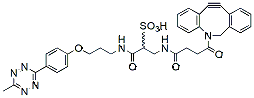
Methyltetrazine-DBCO is a TCO reactive reagent containing a methyltetrazine group and a DBCO moiety. DBCO is commonly used for copper-free Click Chemistry reactions. Reagent grade, for research purpose. Please contact us for GMP-grade inquiries.

This product uses an improved salt precipitation purification method to provide a safe and economical solution for High Weight genomic DNA extraction from blood samples, tissue samples, cultured cells, oral swabs, bacteria, and other samples. The extraction does not require the use of toxic phenol chloroform or any expensive reagents, making it the most economical reagent kit for nucleic acid extraction at present. This kit has no limit onthe amount of sample used and can flexibly adjust various amounts of samples. The obtained DNA can be directly used for experiments such as PCR, enzyme digestion, Southern hybridization, and the Third-generation sequencing.
Principles
SolPure DNA Kits is an improved salt precipitation purification method. (Blood samples are lysed in red blood cell lysis buffer to remove red blood cells, and white blood cells are collected by centrifugation.) After lysis, DNA is released into the lysis buffer. RNA is removed by RNASE A. High salt solution is added to precipitate proteins and impurities. Centrifuge to remove precipitate and obtain supernatant containing only DNA. Add isopropanol to precipitate and recover DNA. Wash with 70% ethanol to remove salt, and finally add Buffer TE to dissolve DNA.
| Contents | D3317-01 | D3317-02 | D3317-03 |
| Purification Times | 10 | 50 | 250 |
| 10 x Buffer RBC | 4 ml | 50 ml | 100 ml |
| Buffer STE | 60 ml | 250 ml | 2 x 550 ml |
| Buffer SDS (20%) | 6 ml | 25 ml | 100 ml |
| Buffer PPS | 20 ml | 90 ml | 400 ml |
| Proteinase K | 12 mg | 50 mg | 240 mg |
| Protease Dissolve Buffer | 1.8 ml | 10 ml | 20 ml |
| RNase A | 5 mg | 20 mg | 60 mg |
| Buffer TE | 10 ml | 60 ml | 250 ml |
RNase A and Proteinase K should be stored at 2–8°C upon arrival. However, short-term storage (up to 4 weeks) at room temperature (15–25°C) does not affect its performance. The remaining kit components can be stored dry at room temperature (15–25°C) and are stable for at least18 months under these conditions. The entire kit can be stored at 2–8°C, but in this case buffers should be redissolved before use. Make sure that all buffers are at room temperature when used.
This product uses an improved salt precipitation purification method to provide a safe and economical solution for High Weight genomic DNA extraction from blood samples, tissue samples, cultured cells, oral swabs, bacteria, and other samples. The extraction does not require the use of toxic phenol chloroform or any expensive reagents, making it the most economical reagent kit for nucleic acid extraction at present. This kit has no limit onthe amount of sample used and can flexibly adjust various amounts of samples. The obtained DNA can be directly used for experiments such as PCR, enzyme digestion, Southern hybridization, and the Third-generation sequencing.

N-(Propargyl-PEG4-carbonyl)-N-bis(PEG1-acid) is a crosslinker that can react with azide compounds or biomolecules via copper catalyzed Click Chemistry to form a stable triazole linkage. The terminal carboxylic acids can react with primary amino groups in the presence of activators (e.g. HATU) to form a stable amide bond.

N-(Propargyl-PEG4-carbonyl)-N-bis(PEG1-acid) is a crosslinker that can react with azide compounds or biomolecules via copper catalyzed Click Chemistry to form a stable triazole linkage. The terminal carboxylic acids can react with primary amino groups in the presence of activators (e.g. HATU) to form a stable amide bond.

12 x 8 strips (96 tests)
Cysticercosis is caused by larval cysts of the tapeworm Taenia solium and is a major cause of adult onset seizures in most developing countries. Diagnosis is based on imaging findings, but in many cases it is not conclusive for the diagnosis. Serological assays has an important place on the final diagnosis of the disease. The ELISA kit hs shown appropriate performances for the serological screening of cysticercosis.
Name of Product
Taenia solium – IgG ELISA
Catalog Number
AF 9700
Short Info
Cysticercosis is caused by larval cysts of the tapeworm Taenia solium and is a major cause of adult onset seizures in most developing countries. Diagnosis is based on imaging findings, but in many cases it is not conclusive for the diagnosis. Serological assays has an important place on the final diagnosis of the disease. The ELISA kit hs shown appropriate performances for the serological screening of cysticercosis.
This product is manufactured by Bordier Affinity Products in Switzerland and distributed in Germany exclusively by Milenia Biotec.
Method/Platform
ELISA in microplate format
Range/Assay Sensivity
98% sensitivity, 98% specificity
Test Principle
The kit provides all the material needed to perform 96 enzyme-linked immunosorbent assays (ELISA) on breakable microtitration wells sensitized with Taenia solium cyst soluble antigens. Specific antibodies in the sample will bind to these antigens and washing will remove unspecific antibodies. The presence of parasite specific antibodies is detected with a Protein A – alkaline phosphatase conjugate. A second washing step will remove unbound conjugate. Revealing bound antibodies is made by the addition of pNPP substrate which turns yellow in the presence of alkaline phosphatase. Color intensity is proportional to the amount of Taenia solium specific antibodies in the sample. Potassium phosphate is added to stop the reaction. Absorbance at 405 nm is read using an ELISA microplate reader. The test can be performed with automatic systems, but this must be validated by the user.
Cysticercosis is caused by larval cysts of the tapeworm Taenia solium and is a major cause of adult onset seizures in most developing countries. Diagnosis is based on imaging findings, but in many cases it is not conclusive for the diagnosis. Serological assays has an important place on the final diagnosis of the disease. The ELISA kit hs shown appropriate performances for the serological screening of cysticercosis.