
The Opentrons Flex 96-Channel Tip Rack Adapter allows the Opentrons Flex 96-channel pipette head to be compatible with Flex tips. The adapter is placed on the work table below the tip rack to ensure the rack is secured.

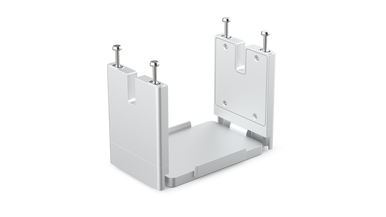
The Opentrons Flex 96-Channel Tip Rack Adapter allows the Opentrons Flex 96-channel pipette head to be compatible with Flex tips. The adapter is placed on the work table below the tip rack to ensure the rack is secured.

The Opentrons HEPA Module enables you to run sensitive contamination-prone applications. It removes 99.99% of 0.3 μm DNA-containing particulates and biological contaminants like bacteria, fungi, and other microorganisms from the air, creating a clean work environment inside the OT-2.
The Opentrons HEPA Module comes in two different voltages. Your account manager will help you choose the correct one for your geographic region.
The Opentrons HEPA Module enables you to run sensitive contamination-prone applications. It removes 99.99% of 0.3 μm DNA-containing particulates and biological contaminants like bacteria, fungi, and other microorganisms from the air, creating a clean work environment inside the OT-2.
The Opentrons HEPA Module comes in two different voltages. Your account manager will help you choose the correct one for your geographic region.


Product Description
20mins High Sensitivity Isothermal DNA Amplification Kit For Accurate Detection
Applicable equipment:
It is recommended to use the Isothermal fluorescence detector developed by Amp-future, which is also suitable for fluorescence quantitative PCR apparatus with market known brands.
Kit Storage and term of Validity
Storage term: stored at ≤-20℃,keep away from light, avoid heavy weight and repeated freezing and thawing.
Term of Validity: 14 months
Isothermal nucleic acid Principle Summary
This kit is based on a rapid nucleic acid amplification technology at room temperature and constant temperature: at room temperature and constant temperature (generally 39℃~42℃), with the help of auxiliary proteins and single-strand binding proteins,the recombinase and primers form a complex;Source search and combine the target homology domain, at this time,a D-loop region is formed at the homology position and strand exchange begins;along with the dissociation of the recombinase from the complex,the polymerase also binds to the 3′ end of the primer and begins chain extension. At the same time, relying on the function of exonuclease, adding specific molecular probes designed according to the template, and using fluorescence monitoring equipment can realize real-time monitoring of the amplification process of the target fragment.
Isothermal nucleic acid Product Features
1/ High sensitivity and specificity, short reaction time.
2/ The reagent form is freeze-dried, stable and easy to operate.
Technical Parameters:
| Parameters | Details |
|---|---|
| Product Name | DNA Isothermal Amplification Kit EXO |
| Manufacturer | Amp-future |
| Storage Temperature | -20°C |
| Kit Components | Enzymes, Buffers ,Reagents |
| Packaging | 48 Tests/box |
| Detection Limit | 500-1000copies/µL |
| Shipping | ICE |
| Test Time | 5-20mins |
Isothermal nucleic acid Applications
Suitable for DNA isothermal rapid amplification kit(fluorescent type)
Primer: Require pair of nucleotide primers with the length of 25-35 bp.
Fluorescent Probe:Require the suitable length is 46-52nt.
DNA fluorescent kit reaction temperature is 39 to 42℃ and time is 5-20 minutes.
Notes
1/ Please avoid nucleic acid contamination and set blank control during reaction due to the high sensitivity of the kit.
2/ Please take out the required quantity of MIRA reaction units for the experiment, and put the rest under storage conditions when performing the experiment.