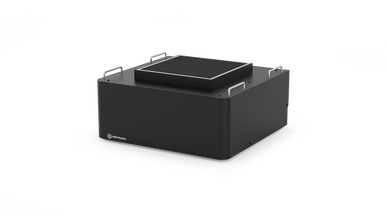
The Opentrons HEPA Module enables you to run sensitive contamination-prone applications. It removes 99.99% of 0.3 μm DNA-containing particulates and biological contaminants like bacteria, fungi, and other microorganisms from the air, creating a clean work environment inside the OT-2.
The Opentrons HEPA Module comes in two different voltages. Your account manager will help you choose the correct one for your geographic region.
Detail
The Opentrons HEPA Module enables you to run sensitive contamination-prone applications. It removes 99.99% of 0.3 μm DNA-containing particulates and biological contaminants like bacteria, fungi, and other microorganisms from the air, creating a clean work environment inside the OT-2.
The Opentrons HEPA Module comes in two different voltages. Your account manager will help you choose the correct one for your geographic region.
Other Products
Hop Resistance Gene-Screen
Product Info
Document
Product Info
Name of Product
Hop Resistance Gene-Screen
Catalog Number
MGScHOR 1
Short Info
This test discovers hop resistance genes in a timely and precise manner
Method/Platform
PCR
Range/Assay Sensivity
10^4 – 10^5 cfu/mL
Test Principle
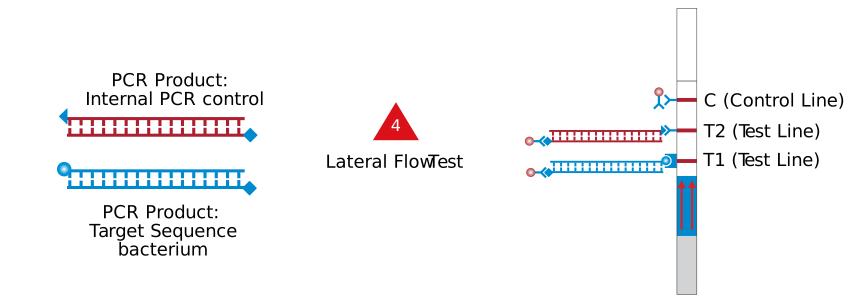
The technological basis for the GenLine tests is the polymerase chain reaction (PCR) combined with lateral flow Tests.
Labelled specific primers are used to amplify specific DNA fragments. In addition to the target gene, a control gene, which is also present in the PCR mixes, is amplified in order to make sure that the PCR process works properly.
The resulting PCR products carry the labels of the incorporated primers.
In a second part of the test, the created PCR products are detected by a lateral flow Test Strip. A “molecular sandwich” is formed and becomes visible as a line on the test Strip.
Brief Instructions
The PCR reagents and the samples are prepared.
After the addition of the sample to the PCR reagents, the PCR is started.
The resulting PCR products are detected by a simple lateral flow test Strip
Name of Product Hop Resistance Gene-Screen Catalog Number MGScHOR 1 Short Info This test discovers hop resistance genes in a timely and precise manner
Method/Platform PCR Range/Assay Sensivity 10^4 – 10^5 cfu/mL Test Principle The technological basis for the GenLine tests is the polymerase chain reaction (PCR) combined with lateral flow Tests.
Usages: For isolating , cultivating mold and yeast .
Principle: Potato flour leaching contribute various mold growth; glucose to provide energy; agar as medium coagulant; chloramphenicol inhibit the growth of bacteria.
Formulation(per liter): Infusion from potatoes 200g Glucose 20g Agar 15g Final pH 5.6 ± 0.2
How to use: 1.Suspend 40g in 1L of distilled water , stirring heated to boiling to completely dissolve ,autoclave at 121 for 15 minutes. 2.Diluted and treated samples.
Storage: Keep container tightly closed, store in a cool, dry place, away from bright light. Storage period of 3 years.