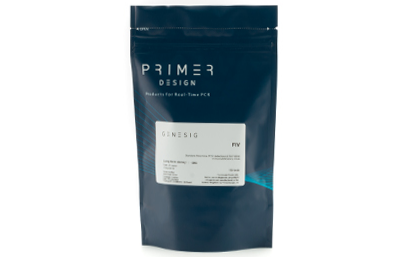
Detection of the SARS-CoV-2 variants with the 20B/S.484K mutation, also known as P2 Rapid detection of specific detection profiles High priming efficiency Sensitive to < 100 copies of target
Positive copy number standard curve for quantification
Accurate controls to confirm findings
96 reactions, includes master mix
Our SNPsig® kits use our own proprietary genotyping method to enable the identification of SARS-CoV-2 variants of concern. These products can be used on any real-time PCR machine using familiar protocols, whilst resulting in exceptional genotyping data.
Positive control templates for wild-type and variants are supplied in every kit to make data interpretation simple.
Our SNPsig® technology provides an alternative to sequencing as well as S gene target failure (SGTF) that enables scientists to analyse and monitor these specific genomic mutations. Our kits can provide a pivotal role in screening for SARS-CoV-2 variants for the purpose of genomic surveillance and studies.
Other Products
[WM1000] YesBlot™ Western Marker I, 250 μl
Product Info
Document
Product Info
Description
YesBlot™ Western Marker I is a ready-to-use mixture with ten IgG-binding proteins covering a wide range of molecular weights from 15 to 200 kDa in Tris-Glycine buffer. YesBlot™ Western Marker I performs dual functions. First, it contains 4 pre-stained proteins (10, 25, 45 and 70 kDa) for monitoring protein separation during SDS-PAGE, verification of Western transfer efficiency on membranes (nitrocellulose, PVDF, or nylon) and for approximating the protein size. Second, ten IgG-binding proteins can be immuno-detected on film or by CCD imaging. YesBlot™ Western Marker I is compatible for chemiluminescent, fluorescent, chromogenic or other detection systems. In addition, YesBlot™ Western Marker I has two reference bands with enhanced intensity (at 30 kDa and 80 kDa). The marker is supplied in the gel loading buffer and is ready to use. Do NOT heat, dilute, or add reducing agents before loading.
Features
Direct visualization — 10 IgG-binding proteins for direct visualization on Western blots
Pre-stained bands — 4 prestained proteins for monitoring protein separation during electrophoresis and Western blotting transferring efficiency on membrane
Wide range — 10 clear bands from 15 to 200 kDa for size estimation
Quick reference — two enhanced bands (30 and 80 kDa)
Contents
The YesBlot™ Western Marker I contains recombinant IgG binding proteins, prestained recombinant proteins, glycerol and SDS.
Storage
4°C for 3 months -20°C for 24 months
Document
YesBlot™ Western Marker I is a ready-to-use mixture with ten IgG-binding proteins covering a wide range of molecular weights from 15 to 200 kDa in Tris-Glycine buffer. YesBlot™ Western Marker I performs dual functions. First, it contains 4 pre-stained proteins (10, 25, 45 and 70 kDa) for monitoring protein separation during SDS-PAGE, verification of Western transfer efficiency on membranes (nitrocellulose, PVDF, or nylon) and for approximating the protein size. Second, ten IgG-binding proteins can be immuno-detected on film or by CCD imaging. YesBlot™ Western Marker I is compatible for chemiluminescent, fluorescent, chromogenic or other detection systems. In addition, YesBlot™ Western Marker I has two reference bands with enhanced intensity (at 30 kDa and 80 kDa). The marker is supplied in the gel loading buffer and is ready to use. Do NOT heat, dilute, or add reducing agents before loading.
(1R,8S,9s)-Bicyclo[6.1.0]non-4-yn-9-ylmethyl Succinimidyl Carbonate is a Succinimidyl ester/NHS-functionalized cyclooctyne derivative for addition of the cyclooctyne moiety into amine-containing compounds or biomolecules. The BCN group can react with azide-tagged biomolecules under copper free conditions.
Document
(1R,8S,9s)-Bicyclo[6.1.0]non-4-yn-9-ylmethyl Succinimidyl Carbonate is a Succinimidyl ester/NHS-functionalized cyclooctyne derivative for addition of the cyclooctyne moiety into amine-containing compounds or biomolecules. The BCN group can react with azide-tagged biomolecules under copper free conditions.
Attogene’s Microcystin Test Kit (Rapid – Drinking Water) can be used to detect microcystins in water to as low as 0.1ppb; highly sensitive, rapid, robust screening kit for microcystins and nodularins.
The most frequently reported cyanobacterial toxins are the hepatotoxic microcystins (MCs). MCs are peptides with a molecular weight ranging from 900 to 1,100 Da. They consist of seven amino acids of which the two terminal amino acids of the linear peptide are condensed to form a cyclic compound.
A tiered notification system which takes different actions based on thresholds for microcytin-LR concentrations in drinking waters has been developed. This is guidance that allows states to take various actions.
For the rapid screening of microcystins in drinking water samples at or above 0.1 ppb. Samples requiring regulatory action should be confirmed by ELISA, HPLC, or other conventional methods.
To protect consumers from adverse health effects caused by these toxins, the World Health Organization (WHO) has proposed a provisional upper limit for Microcystin-LR of 1.0 ppb (μg/L) in drinking water.
The U.S. Environmental Protection Agency (EPA) has also established guidelines for Microcystins in drinking water:
-For children below school age, 0.3 μg/L (ppb)
-For all other age groups, 1.6 μg/L (ppb)
Document
Screening of Microcystins in water samples at 0.1 ppb (drinking water) Format: 10 tests (5 tests/5 controls) Not provided: Water Sample Bottles Run Time: 15 Minutes Finished Drinking Water