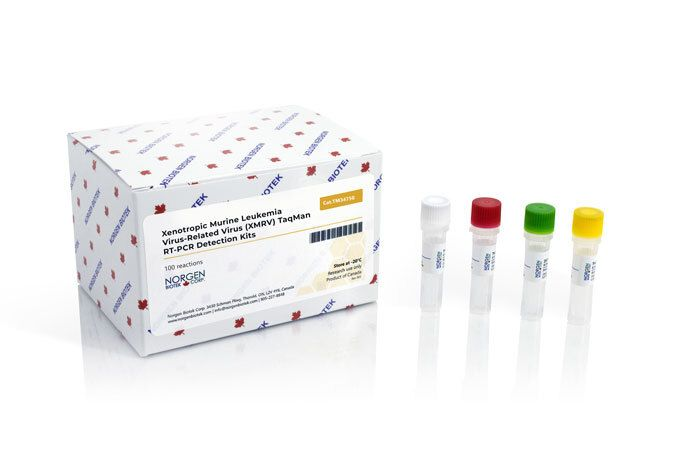
Xenotropic murine leukemia virus-related virus (XMRV) is a gammaretrovirus. The virus was first described in 2006 and has since been isolated from human biological samples. XMRV belongs to the family Retroviridae and the genus gammaretrovirus. It has a single-stranded RNA genome that replicates through a DNA intermediate. The virus gets its name due to its close relationship with the murine leukemia viruses (MuLVs). The viral genome is approximately 8100 nucleotides in length and is 95% identical with several endogenous retroviruses of mice. While gammaretroviruses have well-characterized oncogenic effects in animals, they have not been shown to cause human cancers. However, XMRV was recently discovered in human prostate cancers and is the first gammaretrovirus known to infect humans. In addition to prostate cancer, a possible association with chronic fatigue syndrome has been reported, however it has yet to be established whether XMRV is a cause of this disease.
The causal role of XMRV in cancer has yet to be established and the virus does not appear to be capable of transforming cells directly. In prostate cancer, XMRV protein has been found in tumour-associated but nonmalignant stromal cells, but not in the actual prostate cancer cells. This raises the possibility that the virus may support tumorigenesis. In other studies, XMRV proteins and nucleic acids were found in malignant cells.
Storage Conditions and Product Stability All kit components can be stored for 1 year after the date of production without showing any reduction in performance.
All kit components should be stored at -20°C upon arrival. Repeated thawing and freezing (> 2 x) of the Master Mix and Positive Control should be avoided, as this may affect the performance of the assay. If the reagents are to be used only intermittently, they should be frozen in aliquots.
Attogene Fluorescent UniversalLateral Flow Assay Kits are a convenient ready-to-use kit for quick and cost-effective development of a fluorescent lateral flow dipstick assay for detection of DNA and RNA products.
Fluorescent lateral flow assays can be 2-100 fold more sensitive that gold based lateral flow tests. Europium dyed polystyrene beads conjugated to streptavidin
Formats (fluorescent broad range UV light excitation range of 300nm to 400nm, 610nm emission) Streptavidin conjugate pad):
• Detectable using a black light such as a black light UV flashlight or fluorescent lateral flow reader.
• Detection of nucleic Acid (DNA or RNA) requires the use of a biotin and FAM-labelled primer during amplification.
• Test line: anti-FITC/FAM
• Control Line: Biotin
• Multiplex detection of nucleic Acid (DNA or RNA) requires the use of a biotin, FAM and Dig labelled primers during amplification.:
• Test Line #1: anti FITC/FAM, Line #2: anti-Dig, Line #3 Biotin.
For example, this product can be configured with alternative/custom streptavidin fluorescent particles.
Kit Components
50 -4.5mm Fluorescent Lateral Flow Dipsticks
10 mL Sample assay running buffer
Features & Benefits
Can be used for development of a lateral flow assay for detection of a variety of different molecules such as amplified DNA products from PCR, LAMP and RPA reactions.
No need to stripe capture antibodies
No expensive equipment required (Black Light)
Cost-effective way to screen for further downstream lateral flow assay development.
Accurate & Reliable Testing Solutions Diagnosis Nucleic Acid Detection White Spot Syndrome Virus
Product Description:
The Livestock Disease Kit is a reliable and easy-to-use test kit designed to detect the presence of diseases in livestock, such as cattle, sheep, goats, pigs and horses. The kit has been designed to detect diseases with high accuracy and sensitivity. Also it requires only a small sample volume of 50 μl, making it highly efficient and cost-effective. It is also suitable for a range of canine dog test kit applications, providing fast and accurate results.The reliable detection results make it a reliable and cost-effective solution for farmers and veterinarians looking to diagnose livestock diseases quickly and accurately.
Features:
Product Name: White spot syndrome virusisothermal detetction fluorescence kit
Target Species: Shrimp
Type: Fluorescence Kit
Storage Temperature: -20°C
Sample Type: Serum, Plasma, Whole Blood
Technical Parameters:
Product Name
White spot syndrome virus isothermal detetction fluorescence kit
Type
Fluorescence Kit
Sample Volume
50 μl
Sample Type
Serum, Plasma, Whole Blood
Storage Temperature
-20°C
Package Size
48 Tests/Kit
Target Disease
Livestock Disease
Target Species
Shrimp
Applications:
Amp-future bio Livestock Disease Kit is an innovative animal health care product designed to detect and diagnose livestock diseases. Developed by a Chinese research team, this kit is a simple and reliable solution to test and treat livestock diseases. With its detection limit of 0.1 ng/ml, users can obtain accurate results quickly and accurately. The test time takes from 5-20 minutes, and the kit typically contains 48 tests/kit. Furthermore, it is easy to store with its cold storage temperature of -20°C.
The Amp-future bio Livestock Disease Kit provides an innovative solution for animal health care. It is an essential product for veterinary professionals, pet owners, and animal health researchers to detect and diagnose livestock diseases. With its simple and reliable detection and diagnosis, this kit is a must-have for anyone who wants to ensure the health of their animals.
Support and Services:
Livestock Disease Kit Technical Support and Services
We provide technical support and services for our Livestock Disease Kit. We are committed to helping you get the most out of your product and ensuring your satisfaction with our products and services.
Our technical support staff is available to answer any questions you may have about the product.
We offer online tutorials and user guides to help you understand the product better.
We provide technical assistance to help troubleshoot any issues you may be having with the product.
We offer a warranty on our products.
If you have any questions or need technical support, please do not hesitate to contact us. We are here to help you make the most of your Livestock Disease Kit.
FAQ:
Q: What diseases can Livestock Disease Kit detect? A: Livestock Disease Kit can detect different infectious diseases, such as Foot and Mouth Disease, Bluetongue Disease, Bovine Viral Diarrhea.
Q: How does Livestock Disease Kit work? A: Livestock Disease Kit uses advanced MIRA technology to amplify the target DNA/RNA targent sequences , and detect the disease by analyzing the amplified sequences.
Q: How long does it take to get results from Livestock Disease Kit? A: Livestock Disease Kit can give a result within 5-20 mins.
Q: What type of sample is suitable for Livestock Disease Kit? A: Livestock Disease Kit is suitable for blood, serum, and tissue samples.
Q: Does Livestock Disease Kit require professional equipment? A: No, Livestock Disease Kit does not require any professional equipment,can use with our isothermal equipment or pcr machine
Document
The Livestock Disease Kit is a reliable and easy-to-use test kit designed to detect the presence of diseases in livestock, such as cattle, sheep, goats, pigs and horses. The kit has been designed to detect diseases with high accuracy and sensitivity. Also it requires only a small sample volume of 50 μl, making it highly efficient and cost-effective. It is also suitable for a range of canine dog test kit applications, providing fast and accurate results.The reliable detection results make it a reliable and cost-effective solution for farmers and veterinarians looking to diagnose livestock diseases quickly and accurately.
HiPure HP Plant RNA Mini Kit combines guanidine isothiocyanate lysing and silica gel membrane purification technology to simplify total RNA extraction. Ultracentrifugation in CsCl purification and LiCl / ethanol precipitation are not required. The kit uses DNase digestion to completely remove DNA. It is suitable for extracting up to 100μg of total RNA (including miRNA) from plant samples less than 200mg. Several samples can be extracted within 40 minutes. The purified RNA can be directly used for RT-PCR, fluorescent quantitative RT-PCR, Northern hybridization, second generation sequencing, etc.
Details
Specifications
Features
Specifications
Main Functions
Isolation total RNA (include miRNA) from <200mg difficult-to-extract plant samples (use low toxicity chloroform substitutes)
Applications
RT-PCR, qPCR, Northern hybridization, second generation sequencing, nucleic acid protection, in vitro translation
Purification method
Mini spin column
Purification technology
Silica technology
Process method
Manual (centrifugation or vacuum)
Sample type
Hard-to-extraction plant samples such as fruit and seed, grape leaves, tea
Sample amount
≤200 mg
Elution volume
≥30μl
Time per run
1-24 samples within 30 minutes
Liquid carrying volume per column
800µl
Binding yield of column
100µg
Principle
This kit uses glass fiber filter membrane purification technique, and only requires simple combination-washing-elution steps. The sample is lysed and homogenized in the solution containing guanidine salt, ethanol is added to provide appropriate binding conditions, and transferred to the purification column for centrifugation. Up to 100µg of RNA can be selectively bound to the membrane, pollutants are efficiently washed off after three times of washing, and finally the purified RNA is eluted by RNase Free Water.
Advantages
Completely remove DNA by using of DNase
High quality – one-step RNA extraction reagent combined with silica gel column can obtain the highest concentration
Fast – several samples can be extracted in 40 minutes by column method
Sensitive – RNA can be recovered at the level of PG
Broad spectrum – various types of plant samples can be processed by diversity of operating procedures
Kit Contents
Contents
R416502
D416503
Purification Times
50 Preps
250 Preps
HiPure RNA Mini Columns
50
250
2ml Collection Tubes
100
250
DNase I
600 μl
5 x 600 μl
DNase Buffer
6 ml
30 ml
Buffer PAL
60 ml
270 ml
Buffer GXP2*
20 ml
100 ml
Buffer BDP
60 ml
270 ml
Buffer RW1
50 ml
250 ml
Buffer RW2*
20 ml
2 x 50 ml
RNase Free Water
10 ml
30 ml
Storage and Stability
DNase I should be stored at -20-8°C upon arrival. The remaining kit components can be stored at room temperature (15-25°C) and are stable for at least 18 months under these conditions. The entire kit can be stored at 2-8°C, but in this case buffers should be redissolved before use. Make sure that all buffers are at room temperature when used.
Purchase Guide
1. When dealing with woody or uncommon samples, R4150 is recommended first. R4150 contains two polysaccharide/polyphenol lysis buffer, which is the most universal product.
2. R4151 is recommended for handling common economic crop samples for the first time. Strong lysis solution can be used to process easy-extraction samples. The amount of corn or rice leaves samples can reach up to 300mg.
3. R4165 adopts CTAB/chloroform method, which can also handle a large number of difficult-to-extraction plants, but requires contact with chloroform substitutes, which is less safe than other kits. This kit uses DNase Ⅰ to remove DNA, which is also a good choice for extracting polysaccharide/polyphenol-rich plant samples.
4. R4014 is recommended for fruit/starch plant samples, which uses improved trizol pre-treatment, single column operation and is more economical.
Select the right purification kit to get impactful results:
HiPure HP Plant RNA Mini Kit combines guanidine isothiocyanate lysing and silica gel membrane purification technology to simplify total RNA extraction. Ultracentrifugation in CsCl purification and LiCl / ethanol precipitation are not required. The kit uses DNase digestion to completely remove DNA. It is suitable for extracting up to 100μg of total RNA (including miRNA) from plant samples less than 200mg. Several samples can be extracted within 40 minutes. The purified RNA can be directly used for RT-PCR, fluorescent quantitative RT-PCR, Northern hybridization, second generation sequencing, etc.



 • Detectable using a black light such as a black light UV flashlight or fluorescent lateral flow reader.
