


Attogene’s Microcystin Test Kit (Rapid – Drinking Water) can be used to detect microcystins in water to as low as 0.1ppb; highly sensitive, rapid, robust screening kit for microcystins and nodularins.
The most frequently reported cyanobacterial toxins are the hepatotoxic microcystins (MCs). MCs are peptides with a molecular weight ranging from 900 to 1,100 Da. They consist of seven amino acids of which the two terminal amino acids of the linear peptide are condensed to form a cyclic compound.
A tiered notification system which takes different actions based on thresholds for microcytin-LR concentrations in drinking waters has been developed. This is guidance that allows states to take various actions.
For the rapid screening of microcystins in drinking water samples at or above 0.1 ppb. Samples requiring regulatory action should be confirmed by ELISA, HPLC, or other conventional methods.
To protect consumers from adverse health effects caused by these toxins, the World Health Organization (WHO) has proposed a provisional upper limit for Microcystin-LR of 1.0 ppb (μg/L) in drinking water.
The U.S. Environmental Protection Agency (EPA) has also established guidelines for Microcystins in drinking water:
-For children below school age, 0.3 μg/L (ppb)
-For all other age groups, 1.6 μg/L (ppb)
Screening of Microcystins in water samples at 0.1 ppb (drinking water)
Format: 10 tests (5 tests/5 controls)
Not provided: Water Sample Bottles
Run Time: 15 Minutes
Finished Drinking Water

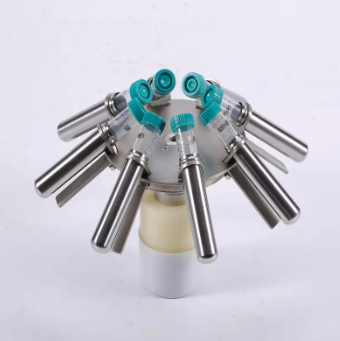
TD5A Low Speed Centrifuge
Features:
 1. Microprocessor control, digital display, touch panel, parameters in running can be edited and change to display other running parameter and RCF.
2. Brushless frequency motor with simpler construction, more reliable performance, longer life and quietly running.
3. Automatic lid lock, super speed, over temperature protection and imbalance protection. The centrifuge body is made of high quality steel, safe and reliable.
4. Adapters are available by experiment requirements.
5. 3 tiers protection steel cover, safe and reliable.
6. TUV CE EMC certificate.
TD5A Technical Parameter:
Matched Rotor for TD5A
| Order NO. | Rotor Type | Max speed(r/min) | Volume (ml) | Max RCF(*g) |
| 5A-1 | Swing rotor (round cup) | 4000 | 4×300ml | 3180 |
| 5A-2 | Swing rotor (square cup) | 4000 | 4×300ml | 3150 |
| 5A-3 | Swing rotor | 4000 | 4×24×7ml | 3150 |
| 4000 | 4×24×5ml | 2750 | ||
| 4000 | 4×18×10ml | 3140 | ||
| 5A-4 | Microplate rotor | 4000 | 2×4×96 well | 2910 |
| 5A-5 | Microplate rotor | 4000 | 2×4×48 well | 2300 |
| 5A-6 | Swing rotor | 5000 | 4×1×50ml | 4730 |
| 5000 | 4×1×100ml | 4730 | ||
| 5A-7 | Swing rotor | 4000 | 4×2×50ml | 3200 |
| 4000 | 4×2×100ml | 3020 | ||
| 4000 | 4×4×15ml | 3200 | ||
| 4000 | 4×6×15ml | 3200 | ||
| 4000 | 4×8×15ml | 3200 | ||
| 4000 | 4×12×5ml vacuum tube | 2480 | ||
| 4000 | 4×12×7ml vacuum tube | 2760 | ||
| 4000 | 4×12×10ml vacuum tube | 2790 | ||
| 4000 | 4×8×10/7/5ml vacuum tube | 2790 | ||
| 4000 | 4×6×10/7/5ml vacuum tube | 2790 | ||
| 4000 | 4×4×10/7/5ml vacuum tube | 2790 | ||
| 5A-8 | Fixed Rotor | 5000 | 6×15ml | 2540 |
| 5A-9 | Fixed Rotor | 5000 | 12×15ml | 3080 |
| 5A-10 | Fixed Rotor | 5000 | 24×15ml | 3500 |
| 5A-11 | Fixed Rotor | 5000 | 30×15ml | 3830 |
| 5A-12 | Fixed Rotor | 5000 | 4×50ml | 2520 |
| 5A-13 | Fixed Rotor | 5000 | 6×50ml | 2850 |
| 5A-14 | Fixed Rotor | 5000 | 12×50ml | 3860 |
| 5A-15 | Fixed Rotor | 4000 | 24×50ml | 2970 |
| 5A-16 | Fixed Rotor | 5000 | 4×100ml | 2630 |
| 5A-17 | Fixed Rotor | 5000 | 6×100ml | 3130 |
| 5A-18 | Fixed Rotor | 4000 | 12×100ml | 2970 |
TD5A centrifuge Max Capacity 4x300ml swing out rotor, max speed 5000rpm, can hold 96 vacuum tubes

| Clone | IHC969 |
| Source | Mouse Monoclonal |
| Positive Control | Thyroid Gland |
| Dilution Range | 1:200 |
Tau proteins are abundant in neurons of the central nervous system, and function in microtubule stability and organization. Defects in Tau functioning and aggregation of these proteins have been clinically linked to a number of neurodegenerative disorders including Alzheimer’s disease, Parkinson’s disease, Pick’s disease (PiD), progressive supranuclear palsy (PSP), cortical basal degeneration (CBD), and frontotemporal dementia with parkinsonism linked to chromosome 17 (FTDP-17).