
Description
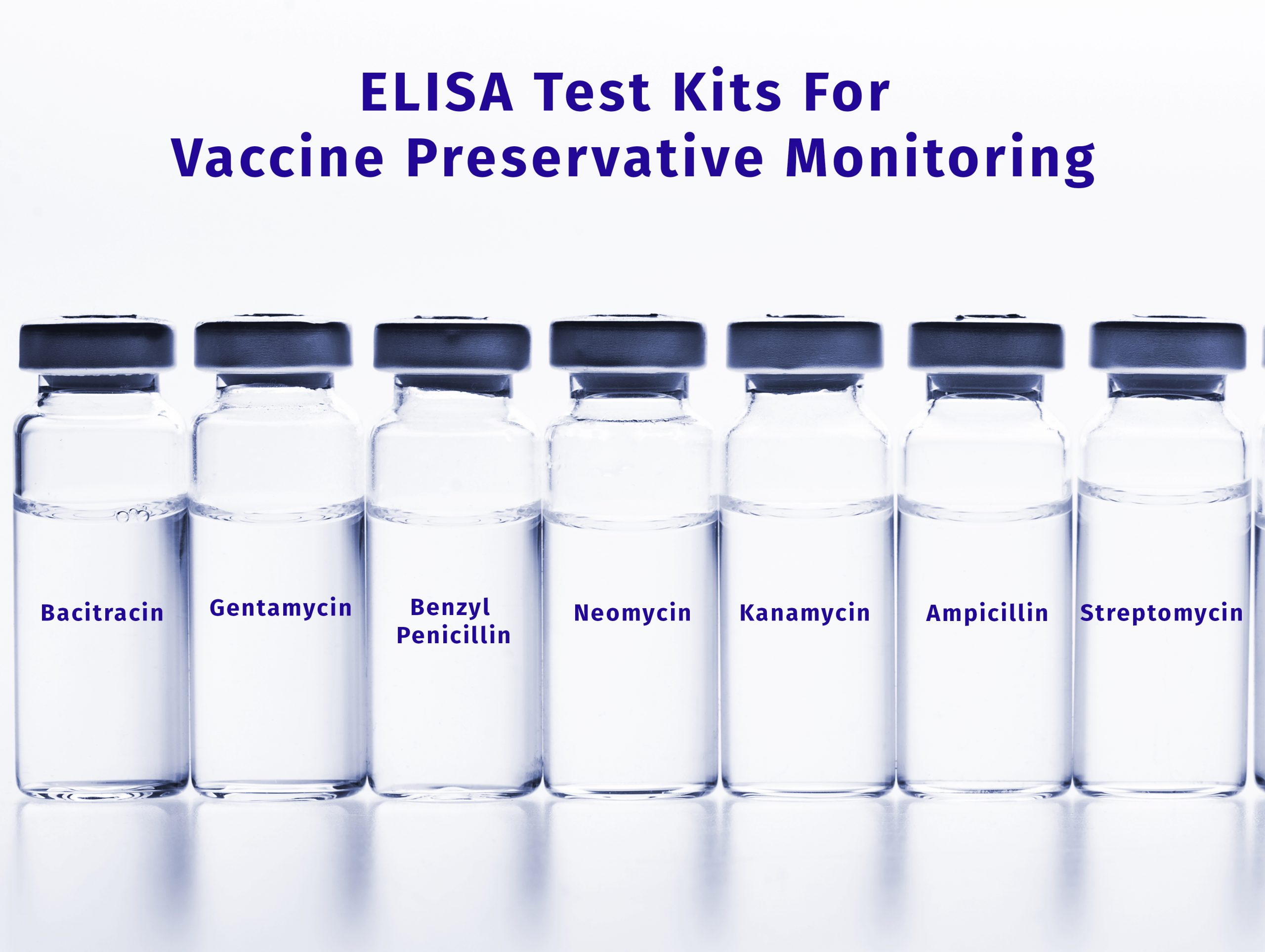
ELISA kits:
Ampicillin ELISA Kit
Bacitracin ELISA Kit
Benzyl ELISA Kit
Gentamycin ELISA Kit
Kanamycin ELISA Kit
Neomycin ELISA Kit
Penicillin ELISA Kit
Streptomycin ELISA Kit

ELISA kits:
Ampicillin ELISA Kit
Bacitracin ELISA Kit
Benzyl ELISA Kit
Gentamycin ELISA Kit
Kanamycin ELISA Kit
Neomycin ELISA Kit
Penicillin ELISA Kit
Streptomycin ELISA Kit
The series of DNA Size Selection Kits (Magnetic Beads) were developed for DNA size selection using magnetic beads. A total of 11 kits are available, with different selection ranges spanning from 50 bp to over 10 kb. The kits provide a simple and quick approach for the enrichment of a specific range of DNA fragments. The kit workflow allows double-sided or single-sided size selection for specific size cutoffs.

.
DNA size selection is a selective capture of DNA fragments of a specific range of size for next-generation sequencing (NGS) library preparations, PCR, ChIP assay, DNA ligations, endonuclease digestions, adapter removal, and other genomics and molecular biology applications. DNA size selection is preferred after NGS library prep in most of the cases. The NGS library preparation is related to the quality of the sequencing data. Precise NGS library size selection can increase sequencing efficiency, improve data quality, and reduce costs.
There are two types of sequencing technologies: short-read sequencing and long-read sequencing. Short-read sequencing uses DNA libraries that contain small insert DNA fragments of similar sizes, usually several hundred base pairs. The sequencing efficiency can be improved if the DNA size selection is in the right range. Cat.# 20104S and 20104L are the best kits for NGS library size selection of illumina paired-end 100 (PE100) sequencing with 100-200 bp library inserts; Cat.# 20105S and 20105L are the best kits for NGS library size selection of illumina paired-end 150 (PE150) sequencing with 150-300 bp library inserts; and Cat.# 20106S and 20106L are the best kits for NGS library size selection of illumina paired-end 300 (PE300) sequencing with 300-600 bp library inserts.
Long-read sequencing uses a large DNA fragment as input and makes very long reads. Usually, library size selection is preferred to remove smaller fragments. Cat.# 20110S and 20110L are the best kits for long-read sequencing size selection with DNA sizes >5 kb, and Cat.# 20111S and 20111L are the best kits for long-read sequencing size selection with DNA sizes >10 kb.
The magnetic beads technology uses paramagnetic particles, also known as SPRI (Solid Phase Reversible Immobilization) beads, to bind DNA reversibly and selectively. DNA fragments can be size-selected and purified by changing the properties of the magnetic beads or SPRI beads. The magnetic beads can easily separate the beads-binding DNA from the contaminants and unwanted components in the samples. The samples after DNA size selection are free of contaminants such as buffer components, enzymes, proteins, salts, dNTPs, primers, and adapters. Our proprietary magnetic beads reagents improve yield, selectivity, and reproducibility.
Specific DNA fragments at a certain length range can be purified simply using magnetic separation with different beads components, avoiding tedious and time-consuming gel extraction and column-based purification. The magnetic beads method is popular for common DNA size selection, including library size selection. The first beads-binding step, referred to as the right-side clean-up, removes large DNA fragments. The large DNA fragments are bound to the beads and are discarded. The desired DNA fragments in the supernatant are transferred to a new well, and new beads are added to the supernatant for the second beads-binding, referred to as the left-side clean-up. The double-size selected DNA fragments are eluted after ethanol rinsing.
.
A single clean-up is needed for DNA size selection with large fragments. In this case, only the large DNA fragments are bound to the beads. The selected larger DNA fragments are eluted after ethanol rinsing.
.

Nucleic acid testing (NAT) is the method of choice for detection and quantification of a wide range of micro organisms. Primerdesign manufactures and supplies high quality quantitative real-time PCR kits for the detection and simultaneous quantification of numerous significant pathogens . A copy number standard curve is provided for quantification and an the internal extraction template (DNA or RNA), controls for the quality of the nucleic acid extraction and eliminates false negative results.
The kit is designed with the broadest possible detection profile to ensure that all clinically relevant strains and subtypes are detected. Target sequences are selected by working with data from key opinion leaders in the field. Multiple sequence alignments and unprecedented real-time PCR expertise in design and validation ensure the best possible kit.
Details of the target and priming specificity are included in the individual handbooks above.
Packaged, optimised and ready to use. Expect Better Data.
Exceptional value for money
Rapid detection of all clinically relevant subtypes
Positive copy number standard curve for quantification
Highly specific detection profile
High priming efficiency
Broad dynamic detection range (>6 logs)
Sensitive to < 100 copies of target
Accurate controls to confirm findings

For the rapid detection and enumeration of coliform bacteria.
Peptone and yeast extract powder provides carbon and nitrogen sources and trace elements; sodium chloride maintains osmotic equilibrium; agar as medium coagulant; dodecyl sulfate inhibit Gram-positive bacteria; chromogenic substrate and large intestine flora β- galactosidase-glucosidase specific reaction, hydrolysis of the substrate, the release of the color groups produce green colonies on the light yellow plate.
Formulation (per liter):
Peptone :10g
Yeast extract powder: 3g
sodium chloride:5g
sodium lauryl sulfate:0.1g
Agar :12g
Chromogenic substrate 2.7g
Final pH 7.0 ± 0.2
How to use:
1. Weigh 32.8g of this product, adding 1L of distilled or deionized water , heated to boiling stirring until completely dissolved, dispensing into flask without autoclaving.
2,Take 25g or 25mL of sample with aseptic procedures, added to the flask containing 225mL of sterile phosphate buffered saline (or saline) is shaken thoroughly homogenized with a homogenizer or a 1:10 dilution 1min, then 1:10 dilution continue to select the appropriate serial dilutions of three, two plates each dilution was inoculated.
3, the use of pour method: The medium is cooled in a water bath to about 50 , sterilized petri dish having a diameter 90mm, 1ml samples were inoculated per dish, then poured into about 15ml of the above dissolution medium, and mix to solidify, upside down, 37 for 24 hours.
4, using surface inoculation: cooled to about 50 , shake devoted to the medium in sterile petri dish. Can be stored in the refrigerator for a day or stored at room temperature for several days (dark, 4 ). The sample was streaked method or filter method, 37 for 24 hours.
5, observe the results.
Quality control:
This product appear light yellow after pouring into plate, these strains were inoculated after 36 ± 1 18 ~ 24h culture growth in the following table.
Growth of bacteria were cultured bacteria numbers feature
Escherichia coli ATCC25922 good green colonies
Citrobacter ATCC8090 good green colonies
Salmonella typhimurium CMCC50115 good colorless colonies
Enterococcus faecalis ATCC29212 suppressed —–
Storage: Store at 10-30 , dark, cool and dry place, tighten the cap immediately after use. Storage period of two years.
1000mL