
Description
ELISA kits:
Ampicillin ELISA Kit
Bacitracin ELISA Kit
Benzyl ELISA Kit
Gentamycin ELISA Kit
Kanamycin ELISA Kit
Neomycin ELISA Kit
Penicillin ELISA Kit
Streptomycin ELISA Kit


ELISA kits:
Ampicillin ELISA Kit
Bacitracin ELISA Kit
Benzyl ELISA Kit
Gentamycin ELISA Kit
Kanamycin ELISA Kit
Neomycin ELISA Kit
Penicillin ELISA Kit
Streptomycin ELISA Kit

TCO-PEG2-DBCO is a short PEG linker featuring a trans-cyclooctene and a DBCO group. DBCO is a click chemistry handle which easily reacts with azides, while the TCO function readily reacts with tetrazine-containing compounds.

TCO-PEG2-DBCO is a short PEG linker featuring a trans-cyclooctene and a DBCO group. DBCO is a click chemistry handle which easily reacts with azides, while the TCO function readily reacts with tetrazine-containing compounds.


Plasmid isolation from bacterial cultures is one of the most popular techniques in biomedical research and pharmaceutical industries. However, it is common that the isolated plasmid DNA is usually contaminated with varied degrees of host RNA. Plasmid purification is necessary to reduce the impact on downstream applications by removing RNA contamination.
We have developed a simple reagent to completely remove RNA contamination in the isolated plasmid samples using Solid Phase Reversible Immobilization (SPRI) beads. SPRI beads consist of paramagnetic particles coated with carboxyl groups that reversibly bind DNA. Our Plasmid Purification Magnetic Beads (RNA Depletion) combines BioDynami’s proprietary chemistries with the reversible DNA-binding properties of SPRI magnetic beads. The reagent removes RNA and recovers the plasmid in the same step. Moreover, unwanted components such as salts, dNTPs, proteins, enzymes, and other impurities can also be removed simultaneously.
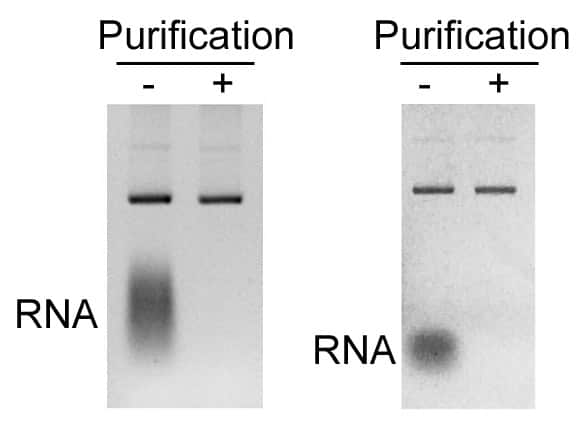
Plasmid can be used for downstream applications such as enzymatic digestion, transformation, transfection and molecular cloning etc. The beads can be an effective and inexpensive reagent for bacterial RNA depletion for routine plasmid purification.
Features
Plasmid isolation from bacterial cultures is one of the most popular techniques in biomedical research and pharmaceutical industries. However, it is common that the isolated plasmid DNA is usually contaminated with varied degrees of host RNA. Plasmid purification is necessary to reduce the impact on downstream applications by removing RNA contamination.

Description
The ExcelRT™ One-Step RT-qPCR kit (TaqMan, no ROX) is designed for reverse transcription and quantitative real-time analysis of a specific target RNA by one-step reaction. The ExcelRT™ One-Step RT-qPCR kit (TaqMan, no ROX), consisting of One-Step RT Enzyme Mix and 2X One-Step Master Mix, is a convenient kit designed for highly efficient cDNA synthesis and highly specific real-time PCR in a single tube. The One-Step RT Enzyme Mix contains a thermostable ExcelRT™ Reverse Transcriptase and a RNAok™ RNase inhibitor. Consequently, One-Step RT Enzyme Mix can reverse transcribe RNA to cDNA at a wide temperature range from 42 to 60°C and active against RNase A, RNase B and RNase C. By containing specialized hot-start Taq DNA polymerase, which greatly reduce primer-dimer formation and can be activated within 2 minutes, the 2X One-Step Master Mix features high specificity and is suitable for fast cycle program.
Features
Storage
Aliquot to avoid multiple freeze-thaw cycles (stable within 30 freeze-thaw cycles)
Protect from light
-20°C for 12 months
The ExcelRT™ One-Step RT-qPCR kit (TaqMan, no ROX) is designed for reverse transcription and quantitative real-time analysis of a specific target RNA by one-step reaction. The ExcelRT™ One-Step RT-qPCR kit (TaqMan, no ROX), consisting of One-Step RT Enzyme Mix and 2X One-Step Master Mix, is a convenient kit designed for highly efficient cDNA synthesis and highly specific real-time PCR in a single tube. The One-Step RT Enzyme Mix contains a thermostable ExcelRT™ Reverse Transcriptase and a RNAok™ RNase inhibitor. Consequently, One-Step RT Enzyme Mix can reverse transcribe RNA to cDNA at a wide temperature range from 42 to 60°C and active against RNase A, RNase B and RNase C. By containing specialized hot-start Taq DNA polymerase, which greatly reduce primer-dimer formation and can be activated within 2 minutes, the 2X One-Step Master Mix features high specificity and is suitable for fast cycle program.