
Description
Specifications
| Clone | IHC072 |
| Source | Mouse Monoclonal |
| Positive Control | Lung Adenocarcinoma |
| Dilution Range | 1:200 |

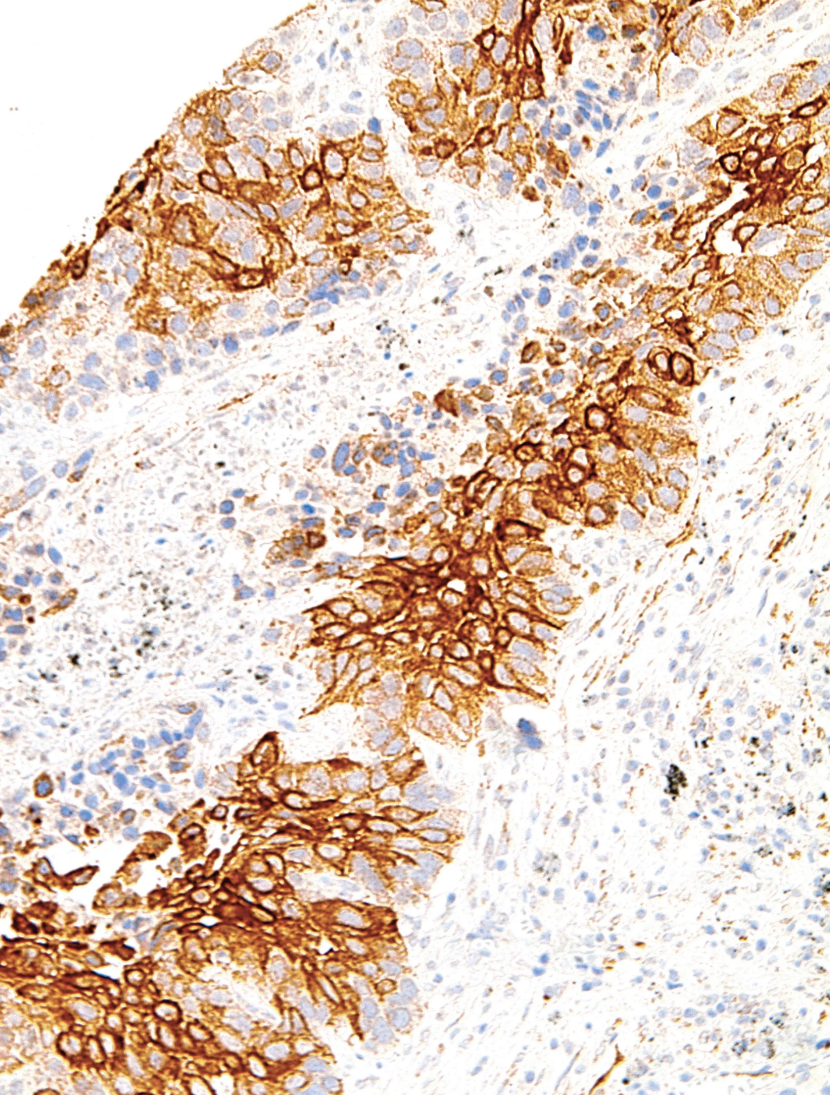
| Clone | IHC072 |
| Source | Mouse Monoclonal |
| Positive Control | Lung Adenocarcinoma |
| Dilution Range | 1:200 |

| Clone | IHC132 |
| Source | Mouse Monoclonal |
| Positive Control | Astrocytoma |
| Dilution Range | 1:200 |
Isocitrate Dehydrogenase 1 (IDH1) is a soluble, cytosolic enzyme involved in the TCA metabolic cycle. The most notable mutation in this enzyme, R132H, is clinically indicated in the majority of astrocytomas and oligodendroglial tumours, with the mutation being associated with more favourable prognosis and increased survival in those patients. IDH1 R132H is also useful in the differential diagnosis between anaplastic glioma and glioblastoma.

Description
The ExcelTaq™ 2X Q-PCR Master Mix (TaqMan, ROX) is a ready-to-use reagent with all the essential components for quantitative real-time PCR (qPCR) except primers, TaqMan probes and templates. The master mix includes a 5’ to 3’ exonuclease activity to cleave TaqMan probes that hybridize to target sequences, releasing fluorophore during probe displacement. With TaqMan probes, the master mix features high specificity and high sensitivity. The ExcelTaq™ 2X Q-PCR Master Mix (TaqMan, ROX) contains hot-start Taq polymerase in an optimized buffer that allows for sensitive and precise amplification, real-time tracking of the amplification process, and simultaneous quantification for targeted DNA molecules. The master mix includes ROX reference dye for the normalization of each qPCR assay. The ExcelTaq™ 2X Q-PCR Master Mix (TaqMan, ROX) is ready-to-use and greatly reduces pipetting errors, while largely improving the reproducibility of the process.
Features
Storage
Protect from light.
Aliquot to avoid multiple freeze-thaw cycles.
-20°C for 12 months
The ExcelTaq™ 2X Q-PCR Master Mix (TaqMan, ROX) is a ready-to-use reagent with all the essential components for quantitative real-time PCR (qPCR) except primers, TaqMan probes and templates. The master mix includes a 5’ to 3’ exonuclease activity to cleave TaqMan probes that hybridize to target sequences, releasing fluorophore during probe displacement. With TaqMan probes, the master mix features high specificity and high sensitivity. The ExcelTaq™ 2X Q-PCR Master Mix (TaqMan, ROX) contains hot-start Taq polymerase in an optimized buffer that allows for sensitive and precise amplification, real-time tracking of the amplification process, and simultaneous quantification for targeted DNA molecules. The master mix includes ROX reference dye for the normalization of each qPCR assay. The ExcelTaq™ 2X Q-PCR Master Mix (TaqMan, ROX) is ready-to-use and greatly reduces pipetting errors, while largely improving the reproducibility of the process.

029150 Phenylanine Deaminase Reagent
Usage:For Phenylalanine Decarboxylase Test.
Specification: 10ml.
10ml