
Thermal adapter for PCR plates, e.g., NEST 96 Well Plate 100 µL PCR Full Skirt. Compatible with the Opentrons Heater-Shaker Module.

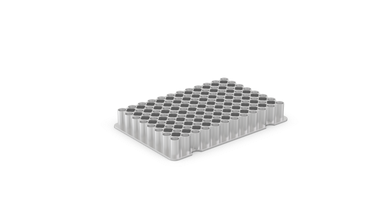
Thermal adapter for PCR plates, e.g., NEST 96 Well Plate 100 µL PCR Full Skirt. Compatible with the Opentrons Heater-Shaker Module.

PACE OneStep RT-PCR Master Mix combines reverse transcription (RT) and PCR in a single reaction. This advanced master mix simplifies workflows by eliminating the need for separate reactions for reverse transcription of RNA to cDNA, and PCR amplification from the newly generated cDNA. PACE OneStep RT-PCR Master Mix is highly efficient and sensitive, enabling detection of low-abundance RNA targets, particularly useful for applications such as gene expression analysis and viral RNA detection. PACE OneStep RT-PCR Master Mix demonstrates robust performance across a wide range of RNA templates and can be employed for both routine and challenging samples.
Genotype directly from RNA samples. RNA reverse transcription and cDNA PCR genotyping simultaneously in a single, one-step reaction.

The Primerdesign™ genesig® kit for Dengue subtypes genomes is designed for the in vitro
differentiation of Dengue subtypes (Dengue-1, Dengue-2, Dengue-3, and Dengue-4). The kit is designed to have the broadest detection profile possible whilst remaining specific to the individual Dengue subtypes.
The primers and probe sequences in this kit have 100% homology with a broad range of clinically relevant reference sequences based on a comprehensive bioinformatics analysis. They therefore have a very broad quantification profile.
Exceptional value for money
Rapid detection of all clinically relevant subtypes
Positive copy number standard curve for quantification
Highly specific detection profile
High priming efficiency
Broad dynamic detection range (>6 logs)
Sensitive to < 100 copies of target
Accurate controls to confirm findings
150 reactions

DBCO-PEG10-DBCO is a monodisperse click chemistry linker containing two terminal DBCO groups with hydrophilic PEG spacer arm. DBCO will react with azide-bearing compounds or biomolecules to form a stable triazole linkage without copper catalyst. PEG spacer arm can increase water solubility and membrane permability. Reagent grade, for research purpose. Please contact us for GMP-grade inquiries.

DBCO-PEG10-DBCO is a monodisperse click chemistry linker containing two terminal DBCO groups with hydrophilic PEG spacer arm. DBCO will react with azide-bearing compounds or biomolecules to form a stable triazole linkage without copper catalyst. PEG spacer arm can increase water solubility and membrane permability. Reagent grade, for research purpose. Please contact us for GMP-grade inquiries.