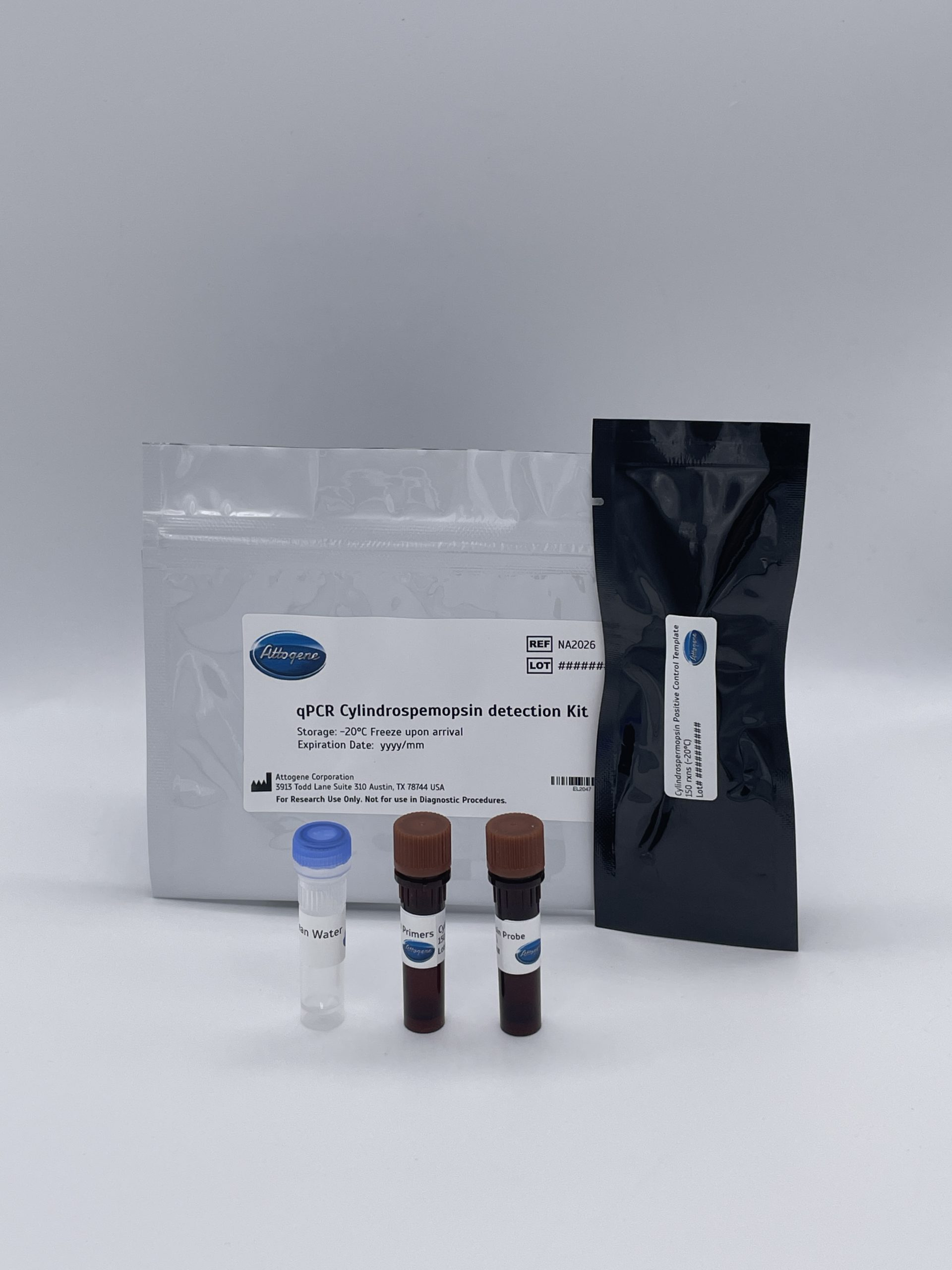
This kit is sufficient for 150 reactions: For characterizing cyanobacteria in environmental samples Use in combination with Attogene Algae DNA isolation kit Universal 16s PCR primers Perfect for Environmental DNA (eDNA) Characterization
Detail
This kit is sufficient for 150 reactions:
For characterizing cyanobacteria in environmental samples
Use in combination with Attogene Algae DNA isolation kit
Universal 16s PCR primers
Perfect for Environmental DNA (eDNA) Characterization
The 16S ribosomal RNA (rRNA) plays a crucial role in bacterial and archaeal ribosomes. This sequence is Highly conserved across bacteria and archaea, it contains variable regions useful for species differentiation and is part of the 30S subunit of prokaryotic ribosomes. 16s rRNA Binds to the Shine-Dalgarno sequence and contributes to the subunit’s structure. Acts as a scaffold for ribosomal proteins.
Because the 16s rRNA sequence is ubiquitous in bacteria and archaea, it can be used to identify a wide diversity of microbes within a single sample and single workflow.
Designed for those labs wishing to separate magnetic beads into rings.
The Permagen ring magnet low elution plate was designed for use in automation applications where volumes as low as 5 µL are required. Most PCR plates are bent, leading to inconsistent lab results. Unlike most products, we have added an angled frame around the top of our plate, this helps with two things, straightening out the PCR plate, and leading it to the proper location on the magnets during automation
SBS SLAS Footprint (127.75mm x 85.50mm) to fit into any automated liquid handling robot
Features include solid aluminum alloy construction and hard coat anodized finish for years of trouble-free use, and compatible with any magnetic beads
Designed for those labs wishing to separate magnetic beads into rings.
The Permagen ring magnet low elution plate was designed for use in automation applications where volumes as low as 5 µL are required. Most PCR plates are bent, leading to inconsistent lab results. Unlike most products, we have added an angled frame around the top of our plate, this helps with two things, straightening out the PCR plate, and leading it to the proper location on the magnets during automation
endo-BCN-PEG2-PFP ester is a click chemistry active ester. The PFP esters have similar applications as the NHS esters, but are more stable in aqueous solution. They can be used to label the primary amines (-NH2) of proteins, amine-modified oligonucleotides, and other amine-containing molecules. The BCN group can react with azide-tagged biomolecules. Reagent grade, for research purpose. Please contact us for GMP-grade inquiries.
Document
endo-BCN-PEG2-PFP ester is a click chemistry active ester. The PFP esters have similar applications as the NHS esters, but are more stable in aqueous solution. They can be used to label the primary amines (-NH2) of proteins, amine-modified oligonucleotides, and other amine-containing molecules. The BCN group can react with azide-tagged biomolecules. Reagent grade, for research purpose. Please contact us for GMP-grade inquiries.